If you’re in the packaging space (whether you’re a snack brand, pharma company, or even a skincare startup), you’ve probably had that panic moment: a batch of products got damaged on the line, or worse, the packaging failed and inventory got ruined before it even hit shelves. As a packaging production equipment supplier, I get asked all the time – “How do your machines actually make sure our stuff stays good until it gets to the customer?” It’s not just about slapping a label on a box, right? There’s a lot going on behind the scenes that most folks don’t see, and that’s exactly what I want to break down today, no jargon, no boring sales pitches – just real talk about what our equipment does to keep product quality front and center. Packaging Industry Production Equipment
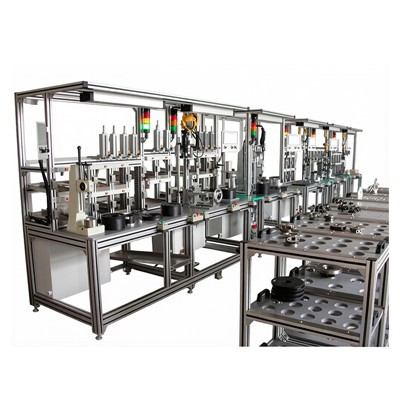
First off, let’s start with the basics: quality isn’t something that gets checked at the end of the line. It’s built in, step by step, as the product moves through the machine. Most people think production equipment just moves fast, but if you slow down to look, every part of our machines is calibrated to catch issues before they turn into big problems. Let’s take filling, for example – if you’re packaging liquid vitamins, a yogurt cup, or even a cleaning chemical, over-filling or under-filling is a quick way to get complaints, waste product, or even trigger regulatory issues (we’re looking at you, FDA and food safety rules). Our filling machines use what’s called “positive displacement flow meters” – yeah, I know that sounds fancy, but basically, it’s a tiny sensor that measures exactly how much product goes into each package, down to the milliliter. No more guessing, no more human error (because let’s be real, even the best operator can get distracted after 10 hours on the job). We program these meters to your exact specs – say, 500ml of almond milk per carton – and if even 2ml is off, the machine automatically shuts down that station and flags it for the operator. That means you don’t have a whole pallet of cartons that are either too light (and get rejected at the warehouse) or too heavy (wasting product and cutting into your profit). I’ve seen brands waste thousands of dollars a batch because their old equipment didn’t have this feature – it’s not rocket science, it’s just paying attention to every tiny detail.
Next up, sealing. This is probably the most critical part for product quality, right? A bad seal = spoilage, contamination, or leaks. For flexible packaging – like snack bags, stand-up pouches, or coffee pods – heat sealing is the go-to, but not all heat seals are created equal. Too little heat, and the seal is weak; too much heat, and it melts the packaging material (which is bad for product, bad for the machine, and bad for waste). Our sealing stations use what we call “temperature profiling” – each seal bar has multiple tiny temperature sensors along its length, not just one in the middle. That’s a game-changer. If your pouch is 12 inches wide, the edges (which cool faster) need more heat than the center, and our machines adjust that automatically. No more thin, flimsy edges that split open when stacked in a truck. Also, for things like sterile packaging (think medical devices or IV bags), we use ultrasonic sealing instead of heat – it uses sound waves to fuse the packaging material without applying excess heat, which keeps the inside of the package sterile. We test every seal before it even leaves our facility, too – each machine goes through a 24-hour run test with mock product, and we check seal integrity using a pressure test: we pump air into the package until it bursts, and we measure exactly how much pressure the seal can hold. If it doesn’t meet our threshold, we tweak the settings until it’s perfect. Our customers tell us this cuts their seal-related defects by like 90% – that’s not a stat I pulled out of thin air, that’s what we see every day with brands that switch to our equipment.
Then there’s handling and orientation, which might seem trivial but makes a huge difference. Let’s say you’re packaging glass jars of pickles – if a jar is tilted wrong when it gets to the capper, the lid might not seal tight, or the pickle brine might leak out before it even leaves the factory. Our equipment uses vision systems (yeah, the same kind your phone uses to take selfies, but for packaging) to check every single package as it moves down the line. These high-speed cameras can spot a tilted jar, a missing label, or a smudged bar code in milliseconds – way faster than any human could. And here’s the thing: if it spots an issue, it doesn’t just kick the bad package off the line (though it does that too) – it adjusts the bad package mid-move if possible. A few months back, we had a cookie brand that was dealing with 3% of their boxes getting crushed because the line was moving too fast and boxes were overlapping. We retrofitted their line with a simple conveyor speed sync feature – the vision system tells the conveyor to slow down just a little if two boxes are getting too close, and that cut their crushed boxes by 98%. No more throwing away perfectly good cookies because a machine couldn’t handle the load. That’s the kind of practical, quality-focused stuff we build into every piece of equipment, not just the fancy high-end models.
Wait, let’s talk about material compatibility too, because that’s something a lot of brands overlook when they’re buying new equipment. If your machine isn’t set up for the type of packaging material you’re using, you’re going to have issues with sticking, tearing, or inconsistent seals. For example, bio-based packaging (like corn-based PLA, which is super popular now for sustainable brands) is way more delicate than old-school plastic. Our machines have adjustable tension controls for film and roll stock – you can tweak how tight or loose the material is as it feeds through, so it doesn’t stretch or tear mid-run. We also work with every customer to test their specific material before the machine even ships. We have a material lab at our facility where we can run tests on your packaging film, jars, pouches – whatever you use – to make sure the machine is calibrated perfectly for it. I can’t tell you how many times a brand has come to us because their last machine messed up their new compostable packaging, and we fixed it in a week because we already had the data on their material. That’s not something all equipment suppliers offer – some just sell you a machine and wash their hands of it, but for us, quality starts before the machine even arrives at your plant.
Another big one: traceability. These days, customers care way more about where their product comes from, and brands need to track every unit in case of a recall. Our equipment integrates with your existing ERP or inventory system (no fancy new software required, we make it easy) to log every step of the packaging process. Every package gets a unique serial number linked to the seal time, filling amount, line operator, and even the temperature of the machine that day. If you have to recall a batch of protein bars because one lot of flour was contaminated, you can pull up exactly which packages were sealed at that time, which truck they went out on, and how many were involved. That’s not just a quality thing – it’s a safety thing. A few years back, we had a cereal brand that had a tiny recall because of a packaging defect, and they used our traceability feature to pull only 200 units instead of 10,000. That saved them millions in brand damage and logistics costs. Traceability isn’t just a buzzword – it’s a core part of how our equipment ensures product quality, because it lets you catch issues fast before they scale.
I know some of you are thinking, “This sounds great, but what about downtime? If the machine is always adjusting, won’t it break more?” Let’s be real – no machine runs forever without a hiccup, and downtime costs brands way more than a few minor adjustments. That’s why we build in predictive maintenance features. Our machines have sensors that track things like motor wear, seal bar temperature drift, and conveyor tension over time. If a sensor notices that a part is starting to wear out, it sends an alert to your team’s phone or computer, days before the part would fail. So you can replace it during a scheduled downtime, not in the middle of a 24-hour run before a big holiday. We have customers that run their lines 18 hours a day, 6 days a week, and our equipment has less than 2% unplanned downtime – that’s unheard of for most packaging lines. Because here’s the thing: if your line is down, product quality goes out the window, too – you’re rushing to get it running, cutting corners on checks, and more mistakes get made. So uptime is directly tied to quality, and we build both into every machine.
Let me wrap this up with a real example from a customer of mine to make it concrete. Last year, a small craft soda brand came to us – they were working out of a 10,000 sq ft warehouse, and their old line was giving them 8% defective units: either leaks, wrong fill amounts, or bad seals. They were losing like $15k a month in wasted product and returns. They couldn’t afford a top-of-the-line industrial machine, so we worked with them to customize a mid-sized line that fit their small space. We added the vision system for tilt checks, the temperature-profiled sealing, and the flow meter filling, and we tested their specific glass bottles and sugar-based soda in our lab. After we installed it, their defect rate dropped to 0.2% – that’s not a typo. They told us that saved them almost $180k in the first year, and they were able to start expanding their line because they had extra space and money from less waste. That’s the kind of impact our equipment has on actual brands, not just big Fortune 500 companies.
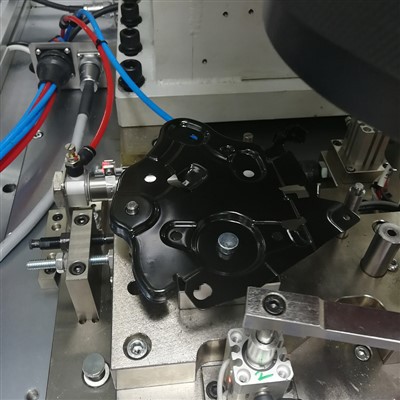
At the end of the day, packaging equipment doesn’t just move boxes or pouches – it’s the first line of defense between your product and the customer. Every sensor, every calibration, every test we run is designed to stop defects before they reach the shelf. If you’re tired of wasting product, dealing with returns, or stressing about packaging failures, we can help. Whether you’re a small startup just getting off the ground or an established brand looking to upgrade your line, we’ll work with you to build a solution that fits your needs, not just our catalog. If you want to chat more about how our equipment can improve your product quality, feel free to reach out to our team to set up a time to talk through your specific needs. No pressure, just real answers about how we’ll help you keep your product great, from our facility to yours.
Automotive Industry Production Equipment References
- Packaging Machinery Association. (2023). "Quality Control in Modern Packaging Production Lines." Industry Best Practices Report.
- Food and Drug Administration. (2022). "Current Good Manufacturing Practices (CGMPs) for Packaging and Labeled Food." Federal Register.
- European Packaging Federation. (2024). "Sustainable Packaging Equipment: Material Compatibility and Quality Standards." Technical Whitepaper.
- Smith, J. (2023). "Reducing Packaging Defects via Automated Vision Systems: A Case Study of Small and Medium Enterprises." Journal of Packaging Technology and Science.
- International Organization for Standardization. (2021). "ISO 15378: Primary Packaging Materials for Medicinal Products – Basic Requirements for Manufacturing and Quality Management." ISO Standards.
Shanghai Zenyan Automation Engineering Co., Ltd.
As one of the leading packaging industry production equipment manufacturers in China, we warmly welcome you to buy advanced packaging industry production equipment made in China here from our factory. All customized machines are with high quality and low price. Contact us for quotation.
Address: 3rd Floor, Building A, No.5629 Beisong Road, Chedun Town, Songjiang District, Shanghai, China
E-mail: zenyan_sh@163.com
WebSite: https://www.zenyanauto.com/
