If you’ve ever spent late nights troubleshooting a custom piece of specialized equipment—whether it’s a medical imaging device for a small clinic, a precision surveying tool for a construction firm, or a climate-controlled incubator for a biotech lab—you know it’s not just gear. It’s months of engineering, thousands of dollars in parts, and a product that has to work flawlessly the second it’s unboxed. As a specialized equipment supplier, I’ve seen more than my share of transport gone wrong: a CT scanner shifted in a van during a rainstorm, its calibration thrown off for weeks; a high-temperature furnace arrived with a cracked heating element because a driver cut a corner too fast; a $50,000 laser system got stuck in customs for three days, held up by incorrect documentation. That’s why transport for specialized equipment isn’t just “shipping” — it’s the most critical part of getting your product to work for you. Over 12 years in this industry, I’ve refined a process that keeps that expensive, precision-built gear intact, and today I’m sharing what I’ve learned. The goal here isn’t to sell you something on the spot — it’s to give you the real, actionable steps that prevent the costly, stressful mistakes I’ve seen too many customers make. Specialized Equipment
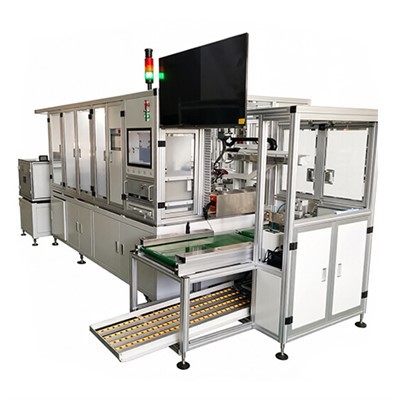
First, before you even book a truck or schedule a pickup, you need to map out every detail of the equipment you’re moving. This isn’t just jotting down “5ft x 3ft x 4ft” on a form. Specialized equipment is almost always custom, with unique components that don’t show up on a basic spec sheet. Last year, a startup called us to transport a portable mass spectrometer they’d built for field testing. They told us it was 200 pounds, so we grabbed a standard 250-lb capacity pallet jack and a regular crate. When our team showed up, we realized we missed two key details: the spectrometer had a fragile optical port on the side that jutted out 6 inches, and it had built-in lithium-ion batteries that the lab had installed but not marked. That mistake almost delayed the shipment by two days when we found out lithium batteries can’t go on standard LTL (less-than-truckload) trucks. Instead, we had to repurpose a custom foam insert that we use for our own mass spectrometers, add a shock-absorbent layer around the optical port, and coordinate with a hazmat-approved carrier for the battery-powered component. If the customer had taken 10 extra minutes to tell us about those two features upfront, we could have avoided the rush and the extra cost of repackaging. The takeaway here: create a transport profile for every piece of specialized equipment that includes exact dimensions (including protruding parts), weight balance points, fragile or sensitive components (optics, screens, wiring), and any regulated parts (batteries, gases, chemicals). Don’t assume a standard spec sheet covers it — ask your engineering team to flag anything that can’t handle rough handling.
Next, choose the right transport method, and this is where specialized equipment differs from a box of office supplies. Most people default to the cheapest option, but when you’re moving gear that costs tens or hundreds of thousands of dollars, “cheap” is a false economy. We categorize our transport needs into three main tiers, and each has a specific use case that’s saved us (and our customers) thousands in repairs. The first tier is white-glove, full-truckload (FTL) transport for large, high-value equipment. This is for things like MRI machines, industrial CNC tools, or climate-controlled incubation systems. With FTL, you’re renting an entire truck, so the equipment never shares space with other shipments. That means no heavy pallets sliding into your unit, no shifting freight, no unknown items being stacked on top. It also lets us customize the interior: we can install wooden bracers to hold the equipment in place, add temperature monitors for sensitive gear, and assign a driver who’s trained in hauling specialized equipment. A few years back, a hospital needed a new linear accelerator — a machine that delivers radiation for cancer treatment — in 10 days, and their initial quote for LTL transport was half the price of FTL. We advised against it, knowing the accelerator’s gantry system was super-sensitive to vibration. We went with a dedicated FTL truck, used air-ride suspension to minimize movement, and assigned a driver who’d completed our specialized transport training. The machine arrived in perfect condition, and the hospital was able to start patient treatments on schedule. The second tier is LTL with specialized handling, for smaller, less volatile equipment. This might be a portable ultrasound machine or a precision measuring tool. Even here, though, you can’t use standard LTL. You need to work with carriers that have experience handling sensitive electronics, that offer inside pickup and delivery (meaning the driver brings the equipment into the building, not just drops it at the loading dock), and that require the equipment to be secured to a pallet with edge protectors and shrink wrap. The third tier is door-to-door courier for small, high-value, ultra-sensitive parts — like a laser diode or a calibrated sensor. Here, you want a courier that offers real-time GPS tracking, temperature-controlled containers, and delivery confirmation with a signature from a specific person, not just a front desk clerk. I once had a customer lose a $10,000 sensor because the delivery driver left it on their loading dock with just a generic signature. We learned to always require a direct signature for these small parts, no exceptions.
Packaging is the unsung hero of specialized equipment transport. I’ve seen perfectly good equipment arrive damaged because someone used the wrong box or skipped a step. Standard cardboard boxes, for example, aren’t enough for most specialized gear. We use three main packaging types, and each is tailored to the equipment’s needs. The first is custom foam-in-place packaging. This is when we spray a foam material that expands around the equipment, creating a perfect, custom fit that absorbs shock. We use this for equipment with irregular shapes, like a surveying drone with retractable blades or a portable spectrometer with protruding parts. The foam holds everything in place, so there’s no shifting during transport. The second is wooden crating. For large, heavy equipment, a wooden crate is non-negotiable. It’s sturdier than cardboard, protects against moisture and impact, and can be labeled as “custom crated” so carriers know to handle it carefully. We always build crates that are 6 inches larger than the equipment on all sides, leaving enough room for shock-absorbent material like bubble wrap or foam padding. The third is temperature-controlled packaging for sensitive gear, like vaccines or lab samples that need to stay at a specific temperature. This isn’t just a insulated box — we use phase-change materials that maintain a constant temperature for 72 hours or more, even if the truck breaks down or is stuck in traffic. A common mistake I see is using a cooler with ice packs for temperature-sensitive equipment. Ice packs melt, and even a few degrees of temperature swing can ruin sensitive samples or electronics. Always work with a packaging company that specializes in temperature-controlled materials for specialized use.
Documentation is the part of transport that most people overlook, but it’s the cause of more delays and headaches than anything else. When you’re moving specialized equipment across state lines or internationally, you need the right papers. For domestic transport, this includes a bill of lading (BOL) that lists every single detail of the equipment — serial numbers, value, fragile components, hazmat parts. The BOL is a legal document, so if the equipment is damaged, it’s what you use to file an insurance claim. We make sure our BOL has three copies: one for the carrier, one for us, and one for the customer, all signed by the driver and our team when the equipment is picked up. For international transport, it’s even more complex. You need a commercial invoice, a packing list, a certificate of origin, and any permits for regulated items (like medical devices or equipment that uses restricted materials). Last year, a customer in Canada ordered a piece of specialized lab equipment from us, and we almost missed a Canadian import permit requirement because we didn’t check the Canada Border Services Agency (CBSA) website for specialized lab goods. We had to rush the permit, and the equipment was held up for four days, delaying the customer’s experiment by a week. Now, we have a dedicated compliance person who checks every country’s import rules for specialized equipment before we even book a shipment. If you’re moving equipment internationally, don’t rely on the carrier to handle all the paperwork — make sure you or your supplier has someone who knows the specific rules for your equipment type.
Finally, insurance is non-negotiable. I’ve had customers ask if they can skip insurance to save money, but when a $200,000 piece of equipment is damaged, that savings disappears fast. Not all insurance is the same, either. Standard cargo insurance for regular freight usually only covers $0.60 per pound, which means a 1,000-pound piece of equipment is only insured for $600 — that’s not enough for most specialized gear. You need specialized cargo insurance, specifically for high-value, sensitive equipment. This insurance covers damage from vibration, temperature swings, rough handling, and even things like road accidents that aren’t the carrier’s fault. We require all our customers to have this insurance, and we also offer it as an add-on service for anyone who doesn’t have it. Last year, a customer’s equipment was damaged when the truck hit a pothole, and the standard carrier insurance only covered $1,200, but the specialized insurance we helped them with covered the full $45,000 repair cost. It’s a small cost compared to the risk.
Automotive Industry Production Equipment Transporting specialized equipment isn’t something you can treat like moving a couch or a box of books. It requires planning, attention to detail, and partners who know the unique needs of your gear. Over the years, I’ve learned that the best way to avoid mistakes is to be transparent: tell your supplier every detail of your equipment, no matter how small it seems. Choose a transport method that matches the value and sensitivity of your gear, invest in proper packaging, get the right documentation, and never skip insurance. At the end of the day, the goal is simple: your specialized equipment should work exactly the way it’s supposed to the second it arrives, no surprises, no delays, no extra costs. If you’re preparing to move specialized equipment and want to work with a team that’s been doing this for over a decade, don’t hesitate to reach out to discuss your specific needs. We can walk through every step, create a custom transport plan, and make sure your gear gets to you safely.
References
- International Air Transport Association. (2022). Specialized Cargo Transport Guidelines. IATA Publishing.
- American Trucking Associations. (2021). Best Practices for Transporting High-Value Sensitive Equipment. ATA Research Foundation.
- Occupational Safety and Health Administration. (2020). Hazmat Transport Requirements for Battery-Powered Equipment. OSHA Publications.
- Project Management Institute. (2022). Risk Management for Specialized Equipment Logistics. PMI Standards.
Shanghai Zenyan Automation Engineering Co., Ltd.
As one of the leading specialized equipment manufacturers in China, we warmly welcome you to buy advanced specialized equipment made in China here from our factory. All customized machines are with high quality and low price. Contact us for quotation.
Address: 3rd Floor, Building A, No.5629 Beisong Road, Chedun Town, Songjiang District, Shanghai, China
E-mail: zenyan_sh@163.com
WebSite: https://www.zenyanauto.com/
