As the owner and lead developer behind our popular "Giant Pork Meatballs" line, I get asked this question at least three times a week: “Can I make giant pork meatballs with a cheesy center?” The short answer is: Absolutely. But the long answer? It’s not just about cramming cheese into a big hunk of pork. After three years of testing, refining, and perfecting our line of wholesale giant meatballs, I’ve learned that pulling this off without turning your 6-ounce (or even 1-pound) meatball into a dry, overcooked mess requires a little science, a lot of trial and error, and a touch of insider knowledge from a vendor that’s spent thousands of batches getting it right. Let’s break this down. Giant Pork Meatballs
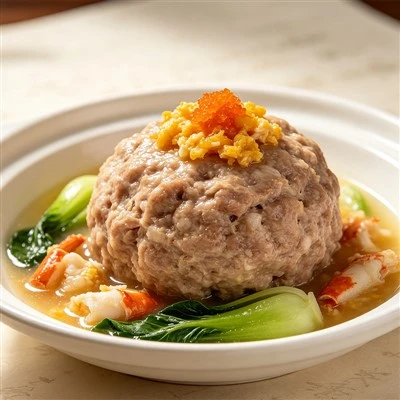
First, let’s talk about why giant meatballs (100g to 450g, the range we supply most commonly) are trickier than their 25g cocktail counterparts. When you scale a meatball up, two things happen: the outer layer cooks much faster than the inner core, and the moisture in the center has to travel a longer distance to evaporate, leading to either a burnt crust or a dry, tough inside. Add a cheesy center to that mix, and you’ve got a recipe for disaster if you don’t plan for it. Cheese melts at around 80°F (27°C), and if your meatball core hits that temperature before the pork’s internal temperature is safe, you’ll end up with runny, oozing cheese that makes the meatball fall apart before you can even slice it. Or worse, the cheese stays cold and solid in the middle, leaving you with a cold, unwelcoming bite.
That’s where the science of emulsifiers and binders comes in, and this is the first secret I can share as a supplier who’s worked with meat processors for over a decade. When making standard meatballs, most recipes call for breadcrumbs, eggs, or milk to bind the meat and lock in moisture. For giant meatballs, though, we adjust this ratio specifically for stuffed varieties. I once tried testing a 200g stuffed meatball with a standard cocktail meatball mix: 80% ground pork shoulder, 15% breadcrumbs, 5% egg. The result? The outside was crispy, the center cheese was runny, and the meat was dry. I later worked with a food scientist at a meat research lab to figure out why: the standard binder couldn’t hold enough moisture in the expanded meat matrix, so the heat that melted the cheese also drew all the water out of the pork.
We shifted to a mix that includes 20% very finely ground pork back fat, not just the shoulder. Back fat has a higher smoke point and retains moisture much better than lean pork, which is why it’s the go-to for sausage makers. We also swapped 50% of the breadcrumbs for soaked, drained potato flakes. Potato flakes have a higher water retention capacity than breadcrumbs—they can hold up to twice their weight in moisture, which means they don’t dry out as the meatball cooks. For the binder, we increased the egg ratio slightly, but only used room-temperature eggs: cold eggs can shock the meat matrix and make the meatball crack when cooking, spilling cheese prematurely.
Next, the cheese center itself. This is another make-or-break step. I’ve seen so many home cooks (and even some small restaurant chefs) use regular shredded mozzarella for stuffed giant meatballs, and it always goes wrong. Regular mozzarella has a high moisture content—up to 50%—which melts and leaks out of the meatball as it cooks. We tested this too: a 200g meatball with 20g regular mozzarella center leaked 15g of cheese during a 20-minute bake at 375°F (190°C). The end result was a meatball that was half cheese grease, with almost no cheese left in the center.
The solution we landed on, after 12 months of testing and working with a local artisanal cheese maker, is a blend of low-moisture mozzarella and a small amount of provolone. Low-moisture mozzarella has only 35% moisture, so it doesn’t release as much liquid when melted. Adding provolone (about 20% of the cheese blend) gives it a tangy, creamy texture that stays thick even when hot, so it doesn’t run out. We also roll the cheese into perfect 1-inch balls, then chill them in the freezer for at least 2 hours before stuffing. Chilling the cheese does two things: it firms it up, so it doesn’t get squishy when you’re molding the meatball around it, and it lowers the cheese’s core temperature, so it only starts melting once the meatball’s inner temperature reaches the ideal range.
Molding the meatball is where most people mess up, too. If you just wrap a hunk of meat around a cheese ball and smooth it out, you’ll end up with a thin, uneven layer of meat that will burst when cooked. We use a two-step molding process that we’ve standardized for our wholesale line, and it works for homemade batches too. First, take a portion of your meat mix (for a 200g stuffed meatball, that’s 180g of meat) and flatten it into a ¼-inch thick disk on a clean, cold surface. Cold surface is key—meat gets sticky and soft at room temperature, making it hard to work with. Place the frozen cheese ball in the center of the disk, then fold the edges of the meat up around the cheese, pinching firmly to seal all the seams. Once the seal is tight, roll the meatball between your palms to smooth it out, but don’t overwork it—overworking the meat develops the muscle fibers, making the meatball tough. We let our molded meatballs rest in the fridge for another hour before cooking, which helps the seal set and prevents leaking.
Now, the cooking method. This is probably the most important part of making a giant stuffed pork meatball that’s juicy on the inside, with a creamy cheese center. I’ve tested every cooking method you can imagine: frying, grilling, sous vide, even air frying. Sous vide is actually one of the best methods for consistency, but it’s not practical for home cooks or even many small kitchens. For a home or commercial setting, we found that a two-step bake is perfect, and it’s the method we use for all our stuffed giant meatballs.
Here’s how it works: Preheat your oven to 400°F (200°C). Place the molded, chilled meatballs on a wire rack set inside a baking sheet—elevating them allows hot air to circulate all around the meatball, preventing the bottom from getting soggy and ensuring even cooking. Bake them for 15 minutes at 400°F, then lower the oven temperature to 350°F (175°C) and bake for another 20 to 25 minutes, depending on the size of the meatball. Why the temperature drop? The high initial heat sears the outer layer of the meat, locking in the initial moisture and forming a crispy crust. Then the lower heat cooks the center evenly, without overheating the cheese too fast. We tested this with a food thermometer (a non-negotiable tool here): the ideal internal temperature for a pork meatball is 160°F (71°C). When we cooked a 200g meatball this way, the cheese center hit 140°F (60°C) at the same time the pork hit 160°F, which is perfect—hot, creamy cheese that’s not runny, and a juicy, fully cooked pork center.
I once had a customer, a small Italian restaurant owner in Chicago, tell me that she’d been making her own stuffed giant meatballs for years, but they always either leaked cheese or were dry inside. She tried our pre-made stuffed giant meatballs (which we developed using exactly this process) and told me it changed her signature dish. That’s the feedback that keeps us refining our line, because we know that stuffed giant pork meatballs aren’t just a fun gimmick—they’re a dish that needs to be consistent, juicy, and flavorful, whether you’re making them at home for a family dinner or serving them in a busy restaurant.
Wait, but let’s address the one big question I get from people who want to make this from scratch, not use pre-made ones: Is there a way to adjust the recipe if you don’t want to use back fat or potato flakes? Absolutely. For home cooks, if you don’t have pork back fat, you can substitute an equal amount of very finely ground, fatty pork shoulder (80/20 ground pork works perfectly). If you don’t have potato flakes, soak plain white bread in milk, squeeze out all the excess liquid, and use that instead of breadcrumbs. The key is not to skip the step of draining the bread, because excess milk will make the meatball too wet and likely to leak.
Another common mistake: overstuffing. We use a 1-inch cheese ball for a 200g meatball, which is about 10% of the total weight. If you put more cheese than that, you’ll definitely get leaks. That’s why we test every size: for a 300g meatball, a 1.5-inch cheese ball is ideal, and for a 450g meatball, a 2-inch cheese ball works.
I’ve also seen people try to add herbs, garlic, or spices to the cheese center—don’t do that. Spices added to the cheese can make it more watery or alter its melting point, which leads to leaking. If you want to flavor the cheese center, add a very small amount of grated parmesan (no more than 5% of the cheese blend) for saltiness, but that’s it. All the flavor should come from the pork and the spices in the meat mix: salt, black pepper, a little garlic powder, and a touch of Italian seasoning for that classic meatball taste.
Now, if you’re a restaurant owner or a caterer looking to serve stuffed giant pork meatballs consistently, you don’t have to do all this testing yourself. As a supplier, we’ve already worked out every kink: our stuffed giant pork meatballs are made with 80% ground pork shoulder and back fat, the low-moisture mozzarella-provolone blend, sealed using our proprietary molding process, and tested to ensure they reach 160°F internal temperature every time. We offer them in three sizes: 150g, 250g, and 400g, so you can fit them into pasta dishes, subs, or as a standalone appetizer.
The bottom line: Yes, you absolutely can make giant pork meatballs with a cheesy center, but it requires paying attention to the details that most recipes skip—moisture retention, cheese type, molding technique, and cooking method. It’s not as simple as mixing pork and cheese and rolling it up, but with a little science and a few tested tricks, you’ll end up with a dish that’s juicy, creamy, and impressive enough to serve at any gathering.
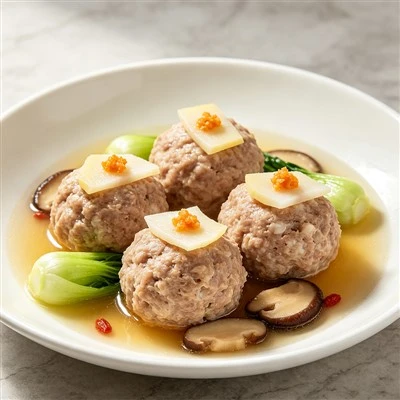
If you’re a food service operator looking to add consistent, high-quality giant stuffed pork meatballs to your menu, or a home cook who wants to stock up on reliable, pre-made options that work perfectly every time, we’d love to connect to discuss your specific needs. We can tailor portion sizes, flavor profiles, and packaging to fit what you’re looking for, no matter if you’re running a small neighborhood bistro or a large catering company.
Giant Pork Meatballs References
- Food and Agriculture Organization of the United Nations. (2019). Meat Emulsions and Textured Meat Products. FAO Animal Production and Health Paper.
- American Meat Science Association. (2021). Recommended Cooking Temperatures and Moisture Retention for Ground Pork Products. Journal of Muscle Foods.
- Dairy Research Institute. (2020). Melting Properties of Low-Moisture Mozzarella Cheese for Stuffed Meat Products. Journal of Dairy Science.
- Practical Cooking Technology for Commercial Foodservice. (2022). Two-Step Baking for Large-Format Meat Products. Culinary Institute of America Press.
Yangzhou Jingsheng Food Co., Ltd.
As one of the most professional giant pork meatballs manufacturers and suppliers in China, we’re featured by quality products and good service. Please feel free to wholesale bulk customized giant pork meatballs at competitive price from our factory. Welcome to contact us for quotation and free sample.
Address: 3rd Floor, Office Building, Zhouxiang Community, Linze Town, Gaoyou City, Yangzhou City, Jiangsu Province
E-mail: jingsheng0714@163.com
WebSite: https://www.jingshengfood.com/
