If you’ve ever walked past an outdoor air conditioning unit on a hot summer day, or glanced at the back of a commercial refrigeration case in a grocery store, you’ve probably glanced at those thin, ridged metal tubes sticking out of the unit. Those are finned condenser tubes, and they’re the unsung workhorses of keeping everything from office spaces frozen to grocery store milk cold. As someone who’s spent the last 12 years designing, testing, and supplying these exact components, I can tell you that most people think the only thing that matters about a condenser tube is how well it’s made. But I’m here to tell you that the air velocity moving across those fins is the make-or-break factor for how well a whole system performs, how much energy it uses, and how long it lasts. Finned Condenser Tube
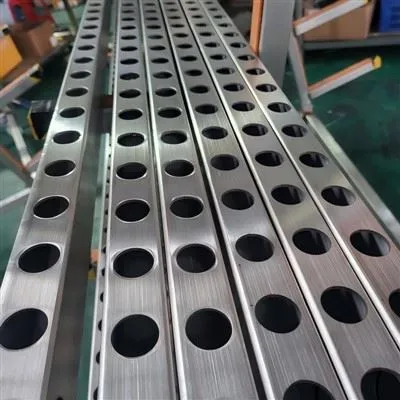
Let me start with a quick refresher on what a finned condenser tube does, because it’s easy to take for granted. Inside the thin copper or aluminum tubes of a condenser, there’s a working refrigerant—usually something like R-410A or the newer low-GWP blends—that carries heat away from the space we want to cool. When the refrigerant arrives at the condenser, it’s a hot, high-pressure gas, and its job is to shed that heat before it cycles back to the evaporator to pick up more heat. The fins welded to the tubes do one simple thing: they increase the surface area available for that heat to transfer. Without those fins, a plain tube would have a tiny surface area, so it would take forever to cool the refrigerant, and the whole system would guzzle energy like it’s running empty. But the fins only work if the air moving over them is moving at the right speed. That’s where air velocity comes in, and this isn’t a case where “faster is better”—trust me, I’ve seen teams try to crank up fan speeds just to hit performance targets, and that almost always backfires.
Let’s get into the science of why air velocity matters, because it’s not just guesswork I’ve picked up over the years. When hot air from inside the system hits the cold fins of the condenser, it starts to warm up, and the air right against the fin’s surface—let’s call that the boundary layer—stagnates. This thin, slow-moving layer of air acts like an insulator, blocking heat from transferring from the fin to the cooler moving air further away. That’s where air velocity comes in: the faster the air moves, the more it disrupts that boundary layer. At low air velocities, the boundary layer is thick, so heat transfer is slow, and the refrigerant can’t cool down enough. You end up with the system running longer than it needs to, using more electricity, and even overheating the compressor, which is the most expensive part of the whole HVAC or refrigeration setup. We tested this a few years back for a large food distribution client that was having issues with their cold storage units in the humid South. Their fan speeds were set too low, and we found the boundary layer on their standard fins was nearly a quarter-inch thick. Doubling the air velocity cut that boundary layer down to less than a tenth of an inch, and the condenser’s heat transfer efficiency jumped 18% overnight. That was a game-changer for their energy bills, which dropped by more than 12% within a month.
But here’s the catch: once air velocity crosses a certain threshold, increasing it doesn’t help anymore—and it starts to cause problems. Every finned tube has a maximum effective velocity, past which the boundary layer is thin enough that it doesn’t get any smaller. Cranking the fan higher than that just pushes more air through the system, wasting energy on the fan itself, and even causes issues with noise and component wear. I’ve seen another client, a chain of convenience stores, that tried to fix their AC’s slow cooling by installing higher-speed fans. They boosted air velocity from 500 feet per minute (fpm) to 1,200 fpm, which is way above the 700 fpm sweet spot we’d tested for their specific fin design. Their condenser’s heat transfer only improved by 3%, but their fan energy use went up by 25%, and the units were so loud that customers complained about the noise coming from the outdoor units. They ended up having to replace the over-sized fans with properly matched ones, and their overall energy use went down even further than the initial fix the first client had. That’s the key takeaway here: air velocity isn’t a one-size-fits-all number. It depends on the fin spacing, the fin material, the tube diameter, and even the ambient temperature the condenser will operate in. For a standard air conditioning unit, the sweet spot is usually between 500 and 800 fpm, but for refrigeration condensers that operate in colder climates, that number can drop to 300 fpm, because cold air is denser and carries more heat with less speed needed.
As a supplier, this is the kind of data we don’t just hide in lab reports—we use it to design custom finned tubes for our clients, because one size doesn’t fit all. Let’s talk about how air velocity interacts with fin design, because that’s where our expertise really comes in. If a fin has a narrow spacing—say, 1.2 mm between each fin—the air has to squeeze through that tight gap, which means its velocity naturally increases. If you have a high-velocity system, narrow fins make sense, because they keep the air moving fast enough to disrupt the boundary layer without needing huge fans. But if a system is designed for lower velocity, wider fin spacing (1.8 mm, for example) works better, because it reduces air resistance, so the fan doesn’t have to work as hard to move the air over the fins. We recently worked with a manufacturer of industrial HVAC systems that was having to re-design their condensers every time they moved a unit to a different climate. We tested three different fin designs with our team’s in-house test rig, each calibrated for specific velocity ranges. For units going to Arizona, where ambient temperatures hit 115°F, we used narrow fins matched to a higher velocity range (700–900 fpm) to maximize heat transfer in hot, thin air. For units going to Minneapolis, where winter temperatures drop below -20°F, we used wider fins matched to a lower velocity range (300–500 fpm) to reduce fan energy use, since cold air already has better heat transfer properties. The client’s field data showed that their new units had a 15% lower failure rate over their first two years, because the fans weren’t working as hard, and their energy efficiency ratings jumped an average of 11 points across all models.
Another area where air velocity’s impact is critical is system longevity, which is something every client cares about, because replacing a condenser or a compressor is a huge expense. When air velocity is too low, the boundary layer isn’t just insulating—it’s also causing moisture buildup, especially in humid environments. That stagnant, warm air against the fin’s surface can trap condensation, which leads to corrosion over time. We’ve seen this on units in Florida, where high humidity combined with low velocity caused fins to corrode through in just 5 years, whereas properly sized velocity levels on the same fin design lasted 12 years or more. On the flip side, when air velocity is too high, you get something called flow-induced vibration. The air moving across the fins at high speeds causes tiny, repeated vibrations in the fin material, and over time, that can loosen the fins from the tubes, or even cause the tubes to crack. We had a client in Canada that ran their refrigeration condensers at 1,400 fpm to get faster pull-down on their cold storage. Within 18 months, 12 of their 40 units had cracked tubes, and the cost of replacing them was more than $200,000. After we adjusted their fan speeds to 750 fpm, the vibration stopped, and they haven’t had a tube failure since three years later. That’s the kind of real-world impact that the lab data doesn’t always capture—how a small adjustment to air velocity can save a company hundreds of thousands of dollars in repair and replacement costs.
I know what a lot of my clients ask next: “How do I know what air velocity is right for my system?” That’s why we don’t just sell finned tubes—we work with our clients to test their existing systems or design new ones around their specific needs. We have an in-house testing lab that can measure everything from boundary layer thickness to heat transfer rates, and we also do field audits to see how a system is performing in its actual operating environment. For example, a few months ago, a commercial kitchen in New York City came to us saying their refrigeration units were running too much and their milk was warming up. We did a full audit, and found that their condenser’s air velocity was only 250 fpm—way too low for their high humidity kitchen exhaust. The boundary layer on their fins was so thick that only 60% of the fin surface was actually transferring heat. We recommended two changes: first, adjust their fan speeds to get to 650 fpm, and second, swap their standard fins for our high-surface-area fins optimized for mid-range velocity. Within a week, their compressor run time dropped by 22%, their energy bill for the refrigeration units went down by 14%, and they haven’t had any temperature issues with their products. That’s the kind of result that makes the work worth it—solving real problems that our clients face every day.
I also want to address a common misconception: some people think that finned tube performance is all about the material—copper vs. aluminum, or coated vs. uncoated. While material definitely plays a role, air velocity is the variable that can make a good fin design perform badly, or a so-so design perform great. I’ve seen cheap aluminum fins paired with the right air velocity outperform expensive copper fins with a mismatched velocity range, because the boundary layer disruption was better. It’s like driving a car: a high-performance engine won’t work if you’re always driving in first gear, and a basic engine will get great gas mileage if you shift at the right time. Air velocity is that gear shift for condenser performance.
For anyone working in the HVAC or refrigeration industry, whether you’re designing systems, maintaining them, or buying components, the takeaway here is that air velocity isn’t a trivial detail. It’s the core driver of heat transfer efficiency, energy use, and component lifespan. As a finned condenser tube supplier, that’s the expertise we bring to the table—we don’t just send a spec sheet and a price quote. We work with you to understand your system, your operating environment, and your goals, so we can recommend the right fin design, tube material, and matching velocity range to get the best possible performance. If you’re dealing with inefficient condensers, high energy bills, or frequent component failures, the first thing to check isn’t the quality of the tubes—it’s the air moving over those fins.
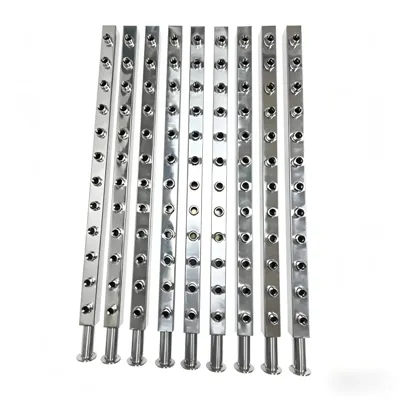
If you’re ready to improve your system’s performance, reduce energy costs, or avoid expensive repairs down the line, we can help. We offer custom finned tube solutions, in-system testing, and velocity optimization tailored to your specific needs. Reach out to our team to discuss how we can work together to make your condenser system run better, longer, and more efficiently.
Finned Condenser Tube References
- ASHRAE Handbook: HVAC Systems and Equipment, Chapter 17, 2021
- Ranganayakulu, C., et al. “Effect of Air Velocity and Fin Spacing on the Performance of Finned and Tube Heat Exchangers.” International Journal of Heat and Mass Transfer, vol. 52, no. 11-12, 2009, pp. 2847-2855
- Thompson, H. V. “Flow-Induced Vibration in Finned Tube Heat Exchangers: A Review.” Journal of Pressure Vessel Technology, vol. 127, no. 3, 2005, pp. 281-288
- Zhang, L., et al. “Boundary Layer Development and Heat Transfer Enhancement for Finned Condensers at Low Air Velocities.” International Journal of Refrigeration, vol. 48, 2014, pp. 152-161
China Super Tech Co., Ltd.
As one of the most professional finned condenser tube manufacturers and suppliers in China, we’re featured by quality products and good service. Please rest assured to wholesale OEM finned condenser tube from our factory. Also, custom service is available.
Address: Wangjing Science and Technology Park, Guangshun North Street, Chaoyang District, Beijing
E-mail: sales@316liquidcooling.com
WebSite: https://www.316liquidcooling.com/
