When I first started working as a chlorine dioxide analyzer supplier, one question came up more than any other—especially from water treatment plant operators, food processing plant managers, and aquaculture technicians—was, “How long does a chlorine dioxide analyzer actually last?” It’s not a trivial question, either. For anyone relying on ClO₂ to keep their process safe, consistent, and compliant, a dead or malfunctioning analyzer isn’t just an inconvenience. It can lead to under-dosing (which leaves water or products unprotected from pathogens), over-dosing (which creates harmful byproducts like chlorite and chlorate), and costly downtime. Chlorine Dioxide Analyzer
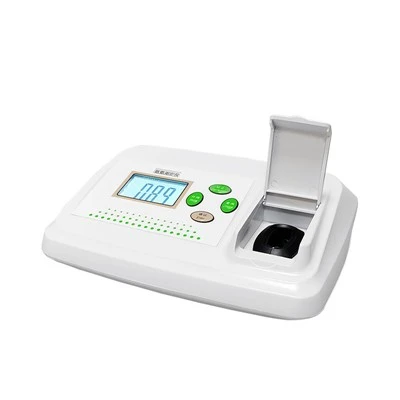
I’ve spent 12 years in this industry, talking to operators who’ve had analyzers die prematurely because of poor maintenance, and others who’ve been using the same unit daily for a decade with barely a hiccup. The short answer? A well-maintained chlorine dioxide analyzer can last 7 to 10 years, sometimes longer. But that number isn’t set in stone. It depends on a mix of factors: how you use it, where you install it, how often you service it, and even the quality of the unit itself. Let’s break this down, because guessing isn’t good enough when it comes to something this critical.
First, let’s get clear on what a chlorine dioxide analyzer does. It’s not just a simple test strip reader. Most industrial units work by either amperometric (measuring the current from a ClO₂ solution interacting with an electrode), colorimetric (using a light sensor to detect the change in a reagent when mixed with ClO₂), or ultraviolet spectroscopy (measuring light absorption at a specific wavelength unique to ClO₂). Each of these designs has different components that wear out in different ways—and at different rates.
Amperometric analyzers are the most common type for continuous monitoring, especially in large-scale water treatment. Their core is a set of electrodes: a working electrode, a counter electrode, and a reference electrode. Over time, the electrodes can foul from debris in the water, react with other chemicals present, or degrade as the electrolyte inside them breaks down. I’ve seen a cheap amperometric unit die in 2 years because an operator in a pulp mill didn’t filter the sample water properly, and wood pulp particles caked on the electrodes, making them unreadable. But a high-quality amperometric unit with easy-to-clean electrodes, installed with proper sample conditioning, can have those electrodes replaced annually, while the rest of the unit’s electronics last 8 to 10 years.
Colorimetric analyzers, which use reagents to create a reaction, have a different set of moving parts. They need pumps to add reagents, valves to direct the sample and reagent mixes, and a sensor to read the color change. The pumps and valves have seals and O-rings that wear out, especially if the unit is running 24/7, 365 days a year. Reagent lines can also get clogged if not purged regularly. But the good news is that the main optical component—the light source and sensor—can last for 10 years or more if it’s not exposed to excessive dust or moisture. We had a client in a beverage plant using a colorimetric analyzer to monitor ClO₂ in their rinse water; they replaced the reagent pumps every 18 months, but the analyzer itself was still going strong after 11 years. The only reason they finally swapped it out was because they upgraded their entire control system, not because the analyzer failed.
UV spectroscopic analyzers are the newer kids on the block, growing in popularity because they don’t need reagents at all. They shine UV light through the sample and measure the absorption, so there are no pumps, no reagents, just a light source and a detector. The light source is the main wear item here—usually a deuterium lamp that needs replacing every 3 to 5 years. The rest of the unit, the electronics and the optical bench, can last a decade or more. A municipal water treatment plant I work with installed a UV analyzer for their finished water monitoring in 2012. They replaced the lamp in 2015, 2018, and 2021, and as of 2024, the unit is still running calibration within 2% of its original accuracy. That’s a huge win for reliability.
Now, let’s talk about the biggest factors that shorten an analyzer’s lifespan, because these are the things operators can control. The first is installation location. If you stick an analyzer in a spot with extreme temperatures—like near a boiler or outdoors in direct, scorching sunlight or freezing cold—its components will degrade much faster. Electronics don’t handle temperature swings well; the heat can warp circuit boards, while freezing can crack sensor glass or burst water lines. A friend who runs a swimming pool supply store once told me he saw three analyzers die in one summer because they were installed next to a pool heater, and the heat melted the plastic sample housing. Proper installation, with climate control or insulation, is non-negotiable.
Sample conditioning is another one. Most water or process water samples have contaminants that can damage the analyzer: sediment, organic matter, other chemicals like chlorine or ammonia, or even high pressure. If you don’t filter the sample to remove sediment, or neutralize interfering chemicals, that stuff will coat your electrodes, clog your lines, or throw off your sensor readings. I had a client in a textile mill who was losing analyzers every 18 months, until we adjusted their sample conditioning system to add a 5-micron filter and a pre-treatment step to remove excess hydrogen peroxide that was interfering with the reading. After that, their analyzers were lasting 7 years.
Maintenance is the third big one. A chlorine dioxide analyzer isn’t a set-it-and-forget-it device. You need to perform regular checks: calibrate it every 3 to 6 months (depending on use), clean the electrodes or optical window, replace worn parts like O-rings or pumps, and log readings to spot any early signs of drift. Drift is the first sign something’s wrong—if your readings start to shift even when the ClO₂ level is stable, that means a component is wearing out. Ignore that drift, and soon the analyzer will give you completely inaccurate numbers. I’ve seen operators skip calibration for a year, and by the time they checked, their analyzer was off by 25%, leading to a $50,000 fine from environmental regulators for over-discharging unprocessed water. That’s a cost that makes any $100 calibration fee look cheap.
And let’s not forget about quality. Not all analyzers are created equal. We’ve seen operators buy cheap, no-name analyzers from overseas, hoping to save money, only to replace them every 2 or 3 years. The electronics are flimsy, the sensors are poorly calibrated, and there’s no support if something goes wrong. A high-quality industrial chlorine dioxide analyzer, built with durable components and tested to handle harsh conditions, might cost more upfront, but it pays for itself over time with fewer replacements, less downtime, and fewer compliance issues. I always tell new customers: the cheapest analyzer isn’t the one that saves you money. The one that lasts is.
Now, what about signs that your analyzer is nearing the end of its life? It’s not just when it stops working. Red flags include consistent calibration failures that can’t be fixed with cleaning, readings that drift more than 5% from the actual ClO₂ level (even after calibration), frequent component failures like dead sensors or circuit boards, and obsolete parts that are no longer available from the manufacturer. Once you start having to replace the core parts every year or so, it’s usually more cost-effective to replace the entire unit rather than keep patching it up.
We recently had a client in a pharmaceutical plant call us with a problem. Their 8-year-old amperometric analyzer was starting to give erratic readings, even after replacing the electrodes and cleaning the sample lines. We sent a technician out to test it, and it turned out the main circuit board had developed a fault that no spare parts were made for anymore. Instead of spending $3,000 on repairs that would only last another year, they opted for a new, updated model, and they haven’t looked back. It’s still running strong 18 months later.
So, to circle back to the original question: how long does a chlorine dioxide analyzer last? If you buy a high-quality unit, install it correctly in a stable environment, maintain it regularly with proper sample conditioning and calibration, you can expect it to last 7 to 10 years, and often longer. But if you cut corners on installation, maintenance, or quality, you’re looking at 2 to 4 years, maybe less.
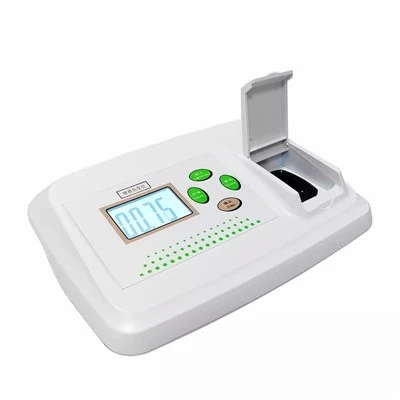
This is why I’m always careful with my customers. I don’t just sell them an analyzer and walk away. I help them figure out the right model for their specific application—whether that’s monitoring drinking water, process water in food and beverage, wastewater, or aquaculture. I train their operators on proper maintenance, calibration, and troubleshooting, because I know that’s what makes the difference between an analyzer that lasts a decade and one that dies in a year.
Sterilizer If you’re currently dealing with an analyzer that’s on its last legs, or you’re shopping for your first one, don’t guess about lifespan. Talk to someone who knows the industry, not just a sales rep pushing the cheapest unit. We’ve worked with hundreds of operators across every sector, and we can help you pick an analyzer that fits your needs, your budget, and will last for years to come. Reach out to discuss your requirements, and we can walk you through the best options for your application.
References
- American Water Works Association. (2019). Water Treatment Operator’s Manual: Disinfection. AWWA.
- USEPA. (2021). Chlorine Dioxide for Water Disinfection: Performance and Maintenance Guidelines. U.S. Environmental Protection Agency.
- World Health Organization. (2018). Guidelines for the Safe Use of Chlorine Dioxide in Drinking Water Treatment. WHO Press.
- European Union. (2020). Industrial Process Monitoring Instruments: Maintenance and Lifespan Best Practices. European Commission Directorate-General for Internal Market, Industry, Entrepreneurship and SMEs.
- Mallinson, M. (2017). Amperometric Sensors for Water Quality Monitoring: Wear and Tear Factors. Journal of Water Process Engineering, vol. 18, pp. 112-118.
Hangzhou Qiwei Instrument Co., Ltd.
Hangzhou Qiwei Instrument Co., Ltd. is one of the most reliable manufacturers and suppliers of chlorine dioxide analyzer in China, featured by quality products and good service. Please rest assured to buy bulk durable chlorine dioxide analyzer in stock here from our factory. We also accept customized orders.
Address: Room 101, Building 25, No. 488-1, Donghu North Road, Linping District, Hangzhou City, Zhejiang Province, China
E-mail: info@qiweilab.com
WebSite: https://www.qiweilab.com/
