When I first started in the large-item logistics game between China and Australia back in 2012, I thought the big ticket was just getting a container on a ship. Fast forward 12 years, and I’m still fielding calls from Australian furniture makers, farm machinery importers, renewable tech installers, and even guys bringing over vintage fire trucks—all asking the same question: “How much does this actually cost me to ship?” It’s not a flat number, not by a long shot. I’ve seen quotes jump $8,000 in a month, drop $10,000 the next, all based on tiny details most shippers never think to flag until I’m holding their cargo booking form. Today, I’m breaking down what really makes up that price tag, no jargon, no hidden fees, just what I see as a provider on the ground in both Shanghai, Guangzhou, Sydney, and Brisbane. Large-item Logistics From China To Australia
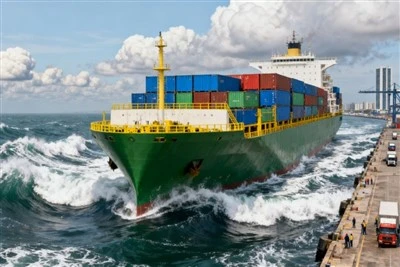
First, let’s get one myth out of the way: “large items” isn’t just “bigger than a shoebox.” For our industry, that means anything that can’t fit into a standard 20ft or 40ft dry van container without needing craning, special securing, or an adjusted loading slot. That might be a 10-seater restaurant booth set, a 5-tonne farm hay baler, a residential solar battery bank stack, a prefabricated granny flat module, or even a full commercial refrigeration unit for a new café. Each of these has its own cost drivers, and I’ll start with the part that’s non-negotiable: origin side costs, the ones we price before it even leaves a Chinese port.
Most Australian shippers don’t realize we don’t just pick up their stuff and walk away. First is cargo handling at the supplier’s premises. If you’re in Guangzhou with a flat-pack set of outdoor sofas, that’s easy: our team can load it straight into a shared container with two other shipments, no extra labor. But if you’re a Melbourne-based builder importing a 12m steel structural beam? That’s a different story. We need to send a certified crane truck to lift it off the factory floor, secure it with wooden crates or steel straps (no flimsy cardboard here—Chinese port cranes weigh 30 tonnes, so loose stuff gets destroyed), and then move it to the origin port. That origin side labor can add anywhere from $200 to $1,200 right there, depending on weight, height, and accessibility. A beam that needs a street crane because the factory gate is too narrow? Add another $300 for a city permit fee.
Then there’s the container or vessel space itself. For large items that need their own space (instead of being stuffed into a shared container), we use flat rack containers or open-top containers—standard dry vans don’t have the side doors you need to fit a 2.5m tall industrial freezer, for example. Flat rack space is the biggest volatile cost I see, because it’s tied directly to global shipping rates, which swing like a pendulum. In 2021, a 20ft flat rack from Shanghai to Sydney was $11,000; today, it’s $4,200. But last quarter, it jumped to $6,800 because a bulk grain shipment from the US had taken out most of the flat rack slots for Q4. Open tops are a bit more stable, usually $200-$300 more than a standard dry van, but only if you book 6 weeks in advance—last minute bookings, like someone importing a replacement combine harvester part for a farm that’s down, can add a 25% surge fee, no exceptions. I’ve turned down a few of these last-minute jobs because booking a last-minute flat rack means we have to pay a premium to a competing provider, and I’d rather quote a fair price than cut corners on reliability.
Wait, and don’t forget port and terminal fees on the China side. Most shippers see this as a tiny line item, but for large items, it’s often 3x what it is for small parcels. Why? Because large shipments take up more terminal space, require separate scanning (customs won’t run a standard scan on a 5-tonne generator), and sometimes need a dedicated slot to avoid getting crushed by standard cargo. At Ningbo Port, for example, a standard 20ft dry van is $1,200 in terminal fees, but a flat rack carrying over 10 tonnes is $1,850—$650 extra just because of its weight. That’s not a scam, that’s port fees based on the resources a heavy cargo uses, and I have to pass that on transparently, no markup.
Now, the ocean freight leg—this is the part that gets the most attention, but it’s rarely the biggest cost for large items. A few years back, when container rates were crazy high, ocean freight was 70% of the total cost for a 20ft flat rack carrying a farm tractor. Today, that’s shifted to about 40%. What’s the rest? Destination side, which is where most of the surprises hit Australian shippers.
Let’s say we get your 10-tonne rock crusher onto a flat rack at Shanghai Port, and it arrives at Melbourne’s Port of Hastings. The ocean leg cost us $4,500, but now we have to get it to your farm outside Ballarat. That’s when the real fees stack up. First is port discharge: large items can’t use standard straddle carriers for heavy cargo, so we need a gantry crane, which costs $800 just to deploy. Then there’s road transport. A standard truck can only carry 12 tonnes, and only if your load is under 2.5m wide and 4.3m tall. Your rock crusher is 2.8m wide and weighs 11 tonnes? That’s an oversize load permit, which Victoria charges $1,200 for a one-time trip, plus a pilot car for the first 50km, another $600. If your farm is outside a regional area, we have to check for weight limits on rural roads, which can add another $300-$500 in route adjustments. I’ve had a customer in Tasmania import a vintage fire truck that was 3m wide, and we had to reroute 20km of coastal road because it had a weight restriction for large trucks—added $900 to the transport cost, and I had to call him three times to explain why I couldn’t just take the most direct route.
Then there’s customs clearance, which is not the same for large items as it is for a box of socks. If you’re importing a prefabricated granny flat, Australian customs requires a structural engineer’s report from China, plus a manufacturing quality certificate, and because it’s a large construction product, it’s subject to the same import duties as other building materials—5% GST on the total value, plus any applicable duty (if it’s a new solar panel array, for example, there’s no duty, but if it’s a vintage fire truck over 25 years old, there’s a luxury car tax on top). I don’t mark up customs fees, I only charge what the Australian Border Force and the relevant department (like the Australian Quarantine and Inspection Service, now part of the Department of Agriculture, Water and the Environment) charge, but I do help customers file the right paperwork to avoid delays, which can add $150 in customs handling fees for large shipments because they require a dedicated broker slot, not a standard small parcel slot.
Wait, let’s talk about two common scenarios I work with, to make this real. First scenario: a Sydney café owner importing commercial-grade stainless steel kitchen equipment, two large prep tables, two under-counter fridges, and a 1.5m wide pizza oven. This all fits into a standard 40ft high cube container, right? Origin side: loading at the Guangzhou factory is easy, $350 labor, no craning, flat fee terminal fees $1,100, 40ft high cube space from Shanghai is $5,200. Ocean freight: $5,200. Destination side: discharge at Port Botany is $1,000, local Sydney transport to the café is $400, customs clearance is $250. Total cost: let’s add that up: $350 + $1,100 + $5,200 + $5,200 + $1,000 + $400 + $250 = $13,500. That’s for a full container of large kitchen gear, no oversize items, no delays. I quoted this customer $14,200 last month, which includes my operational fee (about 5% of the total, to cover our team coordinating pickup, paperwork, and communication) and a small buffer for any minor unforeseen costs, like a last-minute port admin fee.
Second scenario: a Queensland farmer in Toowoomba importing a new 8-tonne hay baler, which can’t fit into a standard container because it’s 2.7m tall. So we use a flat rack. Origin side: factory loading requires a small crane because the baler is too big to fit through the factory gate, $900 labor, flat rack terminal fees $1,800, 20ft flat rack space from Ningbo is $4,800. Ocean freight: $4,800. Destination side: discharge at the Port of Brisbane is $800, transport to Toowoomba is oversize load, $1,500 permit, $700 pilot car, $600 route adjustment, total $2,800, customs clearance $300. My operational fee is $800. Total: $900 + $1,800 + $4,800 + $4,800 + $800 + $2,800 + $300 + $800 = $17,000. That’s $3,500 more than the kitchen gear, just because of the oversize transport and the flat rack space. I told the farmer that if he’d ordered two weeks earlier, we could have got a shared flat rack with another farm shipment, cutting the flat rack cost by $1,200, but he waited until the old baler broke down mid-harvest, so last minute. That’s the biggest lesson I can share: timing cuts costs more than anything else for large items.
Now, what are the hidden costs I always warn customers about? First, insurance. Most small shippers assume their cargo is covered, but standard ocean insurance only covers damage from ship sinking or collision. If a crane drops your large item at the port, or if it’s damaged while loading onto a truck, you’re on your own unless you add our cargo insurance. For large items, insurance is about 0.5% of the total declared value, but I always recommend it—last year, a customer’s 6m steel beam got scratched during loading in Shanghai, and without insurance, he would have had to pay $2,000 to repair it. Another hidden cost is storage. If your shipment is delayed by customs, or if the buyer’s site isn’t ready to unload, port storage at Australian ports is $50 per day for a standard container, $100 per day for a flat rack. I once had a prefab granny flat shipment sit in Port Melbourne for 12 days because the builder forgot to coordinate the crane for unloading, and the customer ended up paying $1,200 in storage fees, which I passed on as a separate line item, no markup.
I also get asked all the time: can I get a cheaper rate by booking through a freight forwarder instead of directly? The short answer is: sometimes, but not if you’re shipping large items. Most big freight forwarders use third-party providers, and they add 10-15% markup on top of the actual cost, because they don’t have dedicated teams for large-item coordination. I have a customer who used a big name forwarder last year to ship a small boat, and he paid $1,800 more than I quoted him, because the forwarder marked up the port fees and transport. Directly working with a provider that does this every day means you cut out that middleman, and you get someone who knows how to navigate large-item specific rules—like not booking a flat rack during Chinese New Year, when all ports shut down for 2 weeks, which would lead to a 30% surge fee.
Wait, let’s talk about seasonal surges, because that’s a big one. Chinese New Year is usually in January or February, and for 6 weeks before and after, port operations slow down, so flat rack and container space jumps 20-30%. Then there’s Australian construction season, which runs from March to September, when prefab granny flat and building material shipments surge, so large-item transport costs rise 15% because of demand. Last year, I had a customer import a small excavator in March, right when construction season kicked off, and he paid $900 more for transport than a customer who shipped the same excavator in December. Timing isn’t just for last-minute things—it’s also for peak seasons.
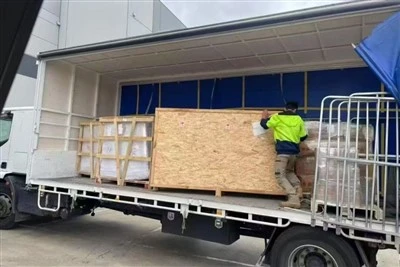
So what’s the short answer to “how much does large-item logistics from China to Australia cost?” It ranges from $12,000 for a full standard container of non-oversize items to $25,000+ for a single oversize item like a prefab module or large farm machine, with all the variables in between. But the real number depends on three things: what your item is (size, weight, fragility), how you prepare it (packing it properly to avoid damage, giving exact dimensions), and how much time you book in advance.
I’ve built this business over 12 years because I don’t hide fees. I’ll send you a detailed breakdown before you book, no fine print, no surprise charges. I’ve had customers come to me after bad experiences with other providers who added “handling fees” that weren’t on the quote, and I make a point of being transparent from the first call. If you’re an Australian importer, a builder, a farmer, or anyone looking to ship large items from China, reach out to discuss your specific needs—whether it’s a small batch of commercial equipment, a prefab structure, or heavy industrial machinery, I can give you an accurate, no-surprise quote tailored to your cargo.
China To Australia Consolidation Shipping References:
National Heavy Vehicle Regulator. (2023). Over-dimensional and over-mass vehicle access rules for Australian roads.
Australian Border Force. (2024). Import requirements for construction, industrial, and agricultural cargo from China.
International Chamber of Shipping. (2023). Flat rack container standard operating procedures for Asia-Pacific trade.
Shanghai International Port Group. (2024). Terminal and handling fee schedule for over-sized cargo.
Shenzhen Kuaihui International Logistics Co., Ltd.
Shenzhen Kuaihui International Logistics Co., Ltd. is a leading China-Australia dedicated logistics service provider in China. As a professional agent and platform, we are committed to providing high quality large-item logistics from china to australia with low price. Welcome to contact us for pricelist.
Address: 3rd Floor, Building 6, Nanbiantou Industrial Zone, Xifang, Songgang Street, Bao’an District, Shenzhen City, Guangdong Province
E-mail: info@kkhwl.com
WebSite: https://www.kuaihuiexp.com/
