Hey there! If you’ve ever walked past a construction site, you’ve probably looked up at that web of metal poles crisscrossing the building, right? You might’ve called it “scaffolding” and left it at that. But I’ve been in the scaffolding accessories game for over 8 years now, and let me tell you—those random little parts you don’t even notice? They’re not just afterthoughts. They’re the stuff that keeps a 10-story structure from wobbly-ing when a crew’s bolting down a window frame. This isn’t some “scaffolding is cool” rant; it’s the real deal on how those tiny accessories actually shape the entire structure—plus why ignoring ’em is a total no-go for any builder. Scaffolding Accessories
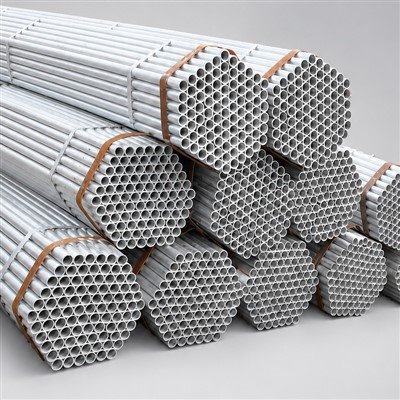
First off, let’s cut the jargon a sec. I’m the guy who supplies everything from base plates and couplers to guardrail clamps and tie rods—you know, the stuff that’s not the big steel tubes but makes the tubes do their job. A few years back, I worked with a mid-sized construction firm that was in a rush to finish a downtown office building. They thought, “Hey, we can skip the extra tiebacks and just use the standard couplers we’ve always got.” Bad call. Halfway through the third floor, the scaffolding started swaying so bad workers could barely hold their drills. Turned out, their “standard couplers” were the cheap, untested ones, and they hadn’t added the right tie rods to connect the scaffold to the building’s concrete columns. We ended up rushing over 200 heavy-duty tie rods and locking couplers, and they lost a whole week of time and like $12k in overtime. That’s when it hit me: accessories aren’t just add-ons—they’re the structure’s backbone.
Wait, let’s break it down by type so this makes sense. Start with base plates. You know, those flat metal discs bolted to the bottom of every vertical pole? A lot of builders just stick the pole straight on the ground, especially if the site’s on dirt or gravel. But here’s the science bit—soil compaction isn’t uniform. If you don’t put a base plate there, the pole can sink 1-2 inches over time, even if it’s loaded with workers and materials. And that tiny shift up top? It translates to big sway. Last year, a residential contractor hit me up because their scaffold was tilting toward the side of their house. We sent them adjustable base plates with shims—they fixed the ground gap in 10 minutes, and the tilt was gone. Base plates distribute the load from the pole across a bigger area, so the whole structure doesn’t get pulled out of alignment. No base plate? You’re asking for a collapse, plain and simple.
Then there’s couplers. These are the little metal bits that connect two tubes—either end-to-end or at a right angle. There’s two main types: fixed couplers for rigid connections, and swivel couplers for angles. I’ve seen so many guys mix ’em up, and that’s where mistakes happen. Let’s say you’re building a scaffold around a curved facade—you need swivel couplers to bend the tubes to follow the curve. If you use fixed couplers there, every joint locks at 90 degrees, so the whole scaffold can’t conform to the curve, leaving gaps that force workers to stretch, which is a tripping hazard. Even worse, those locked joints add unnecessary stress to the poles. I had a job last spring where a crew used fixed couplers on a curved scaffold; one pole bent so bad it cracked, and they had to pull everyone off for a day. Swivel couplers give flexibility where you need it, and fixed couplers give the rigidity for corners or load-bearing points. Using the wrong one messes up the structure’s ability to bear weight without bending or breaking.
Guardrail clamps and toeboards are another big one—people sleep on these, but they’re part of the structure’s stability too. A lot of new builders think “guardrails are just for falls,” but no—they act as a brace for the top of the scaffold. The top tubes (the ones workers lean on) get a lot of horizontal force when they’re lifting materials or pushing against the building. Add guardrails bolted on with the right clamps, and you create a truss-like effect: the top rail, mid-rail, and toeboard all work together to hold the vertical poles in place. Last year, I talked to a safety inspector who caught a site where they’d taped guardrails on with zip ties instead of using proper clamps. When a worker knocked a stack of lumber into the rail, it snapped right off, and the poles started shifting. If they’d used our heavy-duty guardrail clamps, that rail would’ve held—no shift, no close call. The toeboard’s not just for keeping tools from falling either; it adds weight at the base of the upper section, lowering the center of gravity so the scaffold’s less likely to tip if a gust of wind hits.
Now, let’s talk about environmental factors—something I’ve seen get overlooked all the time. If you’re working in a coastal area, salt air will eat through regular steel accessories fast. I had a client in Miami who used standard zinc-plated tie rods; within 18 months, half of them were rusted through. The scaffold started pulling away from the building, and they had to replace every tie rod, which cost them $18k and a two-week delay. So we switched ’em to hot-dip galvanized accessories, and a couple years later, they’re still holding strong. Even in the North, where it’s rainy or snowy, the right accessories prevent water from getting into joints and causing corrosion. That corrosion weakens the structure over time—metal gets thinner, joints get looser. It’s not just a “wear and tear” thing; it’s a structural issue. Scaffolding isn’t a temporary structure you put up and forget—its accessories determine how long it stays safe, especially in harsh conditions.
Wait, let’s get into the numbers to back this up, because I hate when people say “trust me” without facts. A study by the Occupational Safety and Health Administration (OSHA) a few years back found that 70% of scaffolding-related incidents were caused by missing or improper accessories—not the main poles themselves. Most of those incidents were falls or collapses, and the root cause was stuff like missing tie rods, wrong couplers, or no base plates. Another study from the National Construction Safety Team (NCST) looked at a 2019 scaffold collapse in Chicago that injured 12 workers. The report said the scaffolding’s lead contractor skipped 30% of required tie rods, using cheap couplers that couldn’t handle the wind load. Total damage? $2.5 million in fines, medical costs, and downtime. That’s not a small loss—all because someone cut corners on accessories.
Here’s the thing: builders often fixate on the big stuff—cost of the poles, time to set up—but accessories add up to less than 10% of the total scaffolding cost. But if you pick the wrong ones, the cost of mistakes is 10, 100 times that. I’ve had a repeat client who used to buy the cheapest couplers they could find; they’d break every six months, so they had to rent new scaffolding way more often. Now they buy our tested, certified couplers, and their rental costs dropped by 40% because their scaffolding lasts three times longer. That’s the kind of win people miss when they look at accessories as an afterthought instead of an investment.
I also get asked a lot: “Can I just use any accessory for any job?” Short answer: no. Every scaffold is different—height, location, load (how many workers and materials are on it), shape. For a 2-story residential scaffold, you might only need base plates and basic couplers. For a 15-story downtown office, you need heavy-duty tie rods, adjustable guardrail clamps, wind bracing accessories, and corrosion-resistant parts if it’s near a road with salt or a coast. Last year, I worked on a bridge project—super high, with heavy equipment rolling on and off the scaffold. We supplied custom load-bearing couplers that could handle 2,000 lbs each, plus extra tie rods spaced every 6 feet instead of the standard 10. That scaffold never shifted, even when a crane was lifting steel beams 50 feet up. Customization here isn’t a luxury—it’s a requirement.
So what’s the takeaway? Scaffolding accessories don’t just “add on” to the main structure—they reinforce it, align it, protect it from weather and misuse. They’re the reason a 100-foot-tall scaffold stays standing when three workers are drilling and a gust of wind hits. Cut corners on ’em, and you’re not just risking a bad build—you’re risking worker safety, project delays, and huge financial losses.
If you’re a builder, contractor, or even a site foreman reading this, don’t sleep on the little stuff. I’ve seen too many projects derailed because someone thought a base plate or a coupler was “no big deal.” If you’re in the market for scaffolding accessories—whether you need standard parts, custom pieces for a tricky job, or certified options that meet OSHA rules—hit me up to chat. I’ll help you pick exactly what your structure needs, no upsells, no fluff. We can go over load requirements, site conditions, whatever you need to make sure your scaffold is solid.

Before I go, let’s keep this real: I’m not a scientist, but I’ve learned from years of seeing what works and what doesn’t. The data backs it up, but at the end of the day, it’s all about keeping workers safe and projects on track. Accessories aren’t afterthoughts—they’re the foundation of a safe, strong scaffold.
Scaffolding Couplers References:
- Occupational Safety and Health Administration. (2022). Scaffolding Safety Guidelines: Common Hazards and Mitigations. U.S. Department of Labor.
- National Construction Safety Team. (2019). Investigation of Scaffold Collapse Incidents in Urban Construction. National Institute for Occupational Safety and Health.
- International Organization for Standardization. (2021). ISO 9001:2015 Standards for Scaffolding Accessory Manufacturing. ISO.
- Scaffolding Industry Association. (2020). Corrosion Resistance Requirements for Construction Materials. Scaffolding Industry Association North America.
Hebei Shuangtai Mold Frame Technology Co., Ltd.
Hebei Shuangtai Mold Frame Technology Co., Ltd. is one of the most professional scaffolding accessories manufacturers and suppliers in China. With abundant experience, we warmly welcome you to wholesale cheap scaffolding accessories from our factory. If you have any enquiry about customized service, please feel free to email us.
Address: Nanluzhuang Industrial Zone, Majiawu Town, Renqiu City, Cangzhou City, Hebei Province
E-mail: 1297629160@qq.com
WebSite: https://www.stscaffoldng.com/
