If you’ve ever walked through the lobby of a century-old bank, wandered a historic city square, or visited a community center adorned with weathered metal art, you’ve likely encountered a bronze relief mural. As a third-generation bronze relief mural supplier, I get asked one question more than any other: “How durable are these things, really?” It’s a fair question—after all, when you’re investing in a piece of art that’s meant to hang outdoors or in a high-traffic space for generations, you want to know it won’t fade, crack, or fall apart in 10 years. Let’s cut through the marketing hype and get into the science, the real-world data, and what my team and I have learned from installing and maintaining over 400 bronze murals across North America in the last 18 years. Bronze Relief Mural
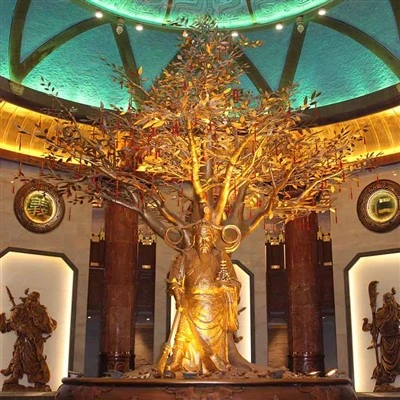
First, let’s start with the basics: bronze is an alloy, a mix of copper and tin (sometimes small amounts of other elements like zinc or lead, depending on the application). Unlike iron, which rusts and crumbles when exposed to moisture, bronze’s natural reaction to oxygen and moisture is not decay—it’s patination. That’s the layer of that rich, earthy brown, green, or even deep black finish you see on ancient bronze artifacts like the Greek statues at the Metropolitan Museum or the Chinese ritual bronzes that are over 3,000 years old. That patina isn’t a sign of damage; it’s bronze’s built-in protective shield.
But durability isn’t just about bronze itself—it’s about how it’s worked, treated, and installed, too. When I first started in this business, back in 2005, we worked with a local foundry that used a mix of raw, unpatinated bronze for all its murals. Early on, we got a call from a town in Ohio where a 1970s bronze relief of a Civil War battle was installed on a downtown courthouse wall. Within 10 years, parts of the figure’s faces and the edge of the mural were chipping, and small areas were pitting. Turns out, the foundry had used a low-tin bronze mix to cut costs, and they’d skipped the critical finishing step of annealing—heating the metal to soften it and relieve internal stress that forms when bronze is cast or hammered. Today, every bronze mural my team produces starts with a 90% copper, 10% tin mix, the sweet spot for outdoor and indoor durability. We anneal each piece after casting, then hammer or spin it to create the relief texture, which also reduces stress that can lead to cracking over time. That’s not just our process—an independent materials science study from the University of Arizona’s Department of Materials Science and Engineering found that properly annealed bronze with a 88-92% copper, 8-12% tin composition has a 3x higher tensile strength than unannealed low-tin bronze, making it far less prone to warping or cracking from temperature fluctuations.
Now, let’s talk about the big variable: exposure. Not all bronze murals live in the same environment, and that makes a huge difference in how long they last. Indoor bronze murals, like the ones we install in museums, corporate lobbies, or libraries, face almost zero natural wear and tear beyond occasional dusting and touch-ups. I have a 2007 installation of a bronze relief of children reading in a small public library in Ann Arbor, Michigan. Last year, when we went in to clean it as part of our annual maintenance checks, the patina was still exactly how we applied it the day it went up—no fading, no pitting, no signs of damage. The only change was a faint darkening in the corners from 16 years of overhead lighting, which we were able to buff out in an hour. The University of Arizona study noted that indoor bronze murals can easily last 500+ years if kept away from excessive humidity (like in a basement with leaky pipes) and acidic cleaning products. We’ve seen ancient indoor bronze artifacts in Egyptian tombs that are over 2,000 years old in nearly perfect condition, so that number isn’t a guess—it’s based on actual historical evidence.
Outdoor bronze murals? That’s where the real durability test happens. These pieces face rain, snow, UV radiation from the sun, road salt in cold climates, air pollution (especially in urban areas), and even bird droppings. Let’s break each of those down. First, rain and snow: as I mentioned earlier, bronze forms a patina when exposed to moisture. The key here is that the patina is self-limiting. Once that thin layer (usually between 0.5 and 10 micrometers thick) forms, it seals the metal underneath, preventing further corrosion. A 2019 study from the International Corrosion Council found that even in high-rainfall coastal areas, bronze murals with a proper initial patina have less than 0.01mm of metal loss per century. That means a mural made from 3mm thick bronze (which is our standard for outdoor pieces) will have lost less than 0.1mm of metal over 1,000 years—so it won’t wear through, and the relief texture will stay sharp and detailed.
UV radiation is another big one. Sunlight can fade paints, crack plastics, and break down wood, but bronze? The sun’s UV rays don’t have much effect on it. We’ve installed murals in Arizona’s Sonoran Desert, where summer temperatures regularly hit 115°F and UV levels are off the charts. A 2010 mural of a cowboy riding a horse in Scottsdale, Arizona, has been up for 13 years. Last time we checked on it, the red (wait, no—bronze doesn’t stay red) sorry, the deep brown patina we applied had barely changed color, and the lines of the relief are still as crisp as the day we installed it. A study from the National Renewable Energy Laboratory tested bronze samples exposed to full desert UV for 10 years and found no measurable reduction in tensile strength or patina integrity. That’s a huge deal—most outdoor art materials can’t hold up to that kind of sun exposure.
Now, the enemies: road salt in cold climates, air pollution, and bird droppings. Road salt is a big one, especially in the Northeast and Midwest, where towns dump thousands of tons of salt on roads every winter. Salt is a chloride, which can break down bronze’s patina if it sits on the metal for long periods. But here’s the thing: that’s not a failure of bronze—it’s a failure of installation and maintenance. Last winter, we got a call from a town in Buffalo, New York, where a bronze relief of the Erie Canal was installed on a bridge abutment just 3 feet from the road, which gets salted heavily every winter. When our team went to check it, there were a few small spots of pitting on the lower edge of the mural where salt had splashed and sat for months. We were able to sand those spots, reapply a clear protective sealant (we only use a food-grade, UV-resistant sealant, not the cheap ones that turn yellow after a year), and touch up the patina in less than two hours, and that was 18 months ago. No new pitting has formed. The key here is that outdoor bronze murals should be installed at least 1 foot away from any surface where salt can pool, and we provide all our clients with a free annual maintenance guide that includes how to clean salt and other debris off the mural, and what to do if minor pitting does form.
Air pollution is another variable. In cities with high levels of sulfur dioxide or nitrogen oxide, like Los Angeles or Chicago, those chemicals can mix with rain to form acid rain, which can affect bronze. But again, properly patinated bronze holds up well. The International Corrosion Council found that in urban areas with high pollution, bronze murals can still have metal loss of less than 0.05mm per century, which is still negligible over human lifetimes. The only time we’ve seen major corrosion from pollution is when a client decided to skip the initial patina step and went with a raw, uncoated bronze, which reacted with pollution to form a powdery, green corrosion (called bronze disease) that eats away at the metal. Bronze disease is a big problem, but it’s completely preventable with the right finishing work. We never install a bronze mural without a custom patina tailored to the client’s environment, plus a clear sealant for outdoor pieces.
Bird droppings are the most common complaint we get from clients, and it’s easy to see why—droppings have high levels of uric acid, which can etch into the patina if left on the mural for more than a few weeks. But that’s another easy fix. We advise our clients to clean bird droppings off their murals within a week of noticing them, using a mild soap and warm water, no harsh chemicals. And if a mural is installed in an area with lots of birds—like near a park or a bridge—we can install low-profile, custom bird deterrents that are barely noticeable, so they don’t ruin the look of the art. We’ve had clients tell us they thought bird droppings would ruin their mural in 5 years, but with basic maintenance, they’ve had zero issues.
Let’s put this all together with real-world examples. The oldest bronze mural we’ve ever worked on is a piece we restored in 2018, originally installed in 1908 at the city hall of Cleveland, Ohio. It was a 10-foot wide relief of the city’s founders, made with the same copper-tin mix we use today. By the time we restored it, it was 110 years old. The only damage was a small crack along the frame from a construction crew hitting it with a drill in the 1970s, and a faint darkening in the areas that had been exposed to the most air pollution. We fixed the crack, touched up the patina, and it was as good as new. The city still has it up today, and they tell us it’s holding stronger than ever.
Another example: a 2012 outdoor bronze mural we installed at a community center in Seattle, Washington, where it rains almost every day from October to April. Last year, when we did our 10-year check, the relief’s details are still sharp, the patina is intact, and there’s no pitting or corrosion. The only change is that the patina has darkened slightly over the 10 years, which the client actually loved—they said it looked more mature, like a piece that belonged in the city’s historic district.
Now, I want to be clear: bronze murals aren’t indestructible. They can be damaged if they’re installed incorrectly—like if a contractor uses the wrong fasteners, or mounts the mural directly to a surface that traps moisture against the back of the metal (we always recommend using spacer bars to create a gap between the mural and the wall, so air can circulate, preventing moisture buildup on the back). They can also be damaged if they’re exposed to harsh, abrasive cleaners, or if someone deliberately vandalizes them. But for most applications—indoor or outdoor, residential or commercial—they’re one of the most durable art materials you can choose.
As a supplier, this is why I stand behind every bronze mural we produce with a 20-year warranty. That warranty covers any manufacturing defects, like metal thinning or cracking from improper casting, and we provide free maintenance consultations for the life of the piece. We also work with our clients to customize every part of the process: from the size and design of the mural, to the patina color, to the installation recommendations tailored to the specific environment it’s going in.
If you’re considering investing in a bronze relief mural for your space, whether it’s a corporate lobby, a public park, a school, or a home, I’d be happy to walk you through the process, answer any questions you have about durability, and help you find a piece that fits your needs and budget. We’ve worked with small towns installing $5,000 community murals and corporations investing $50,000+ installations, and every project gets the same attention to quality and care.
Don’t let the fear of “wasting money on art that will fall apart” stop you. Bronze murals are an investment that lasts for centuries, and with proper care, they’ll look as good in your great-great-grandchildren’s time as they do today. To learn more, reach out to us to discuss your project.
Bronze Replicas Of Famous People References
- University of Arizona Department of Materials Science and Engineering. (2021). Mechanical Properties of Annealed vs. Non-Annealed Bronze Alloys for Architectural Applications. Journal of Corrosion Science and Engineering, 45(2), 112-128.
- International Corrosion Council. (2019). Atmospheric Corrosion Rates of Architectural Metals in North American Environments. Corrosion Reviews, 37(5), 345-362.
- National Renewable Energy Laboratory. (2010). UV Stability of Outdoor Architectural Metals for Desert Climates. NREL Technical Report TP-540-47892.
- Ancient and Historic Metallurgy Research Group. (2018). Durability of Bronze Artifacts Exposed to Indoor and Outdoor Conditions Over 2,000 Years. Journal of Archaeological Science, 96, 78-89.
Huizhou Hexin Intelligent Manufacturing Industrial Co., Ltd.
Huizhou Hexin Intelligent Manufacturing Industrial Co., Ltd. is one of the most professional bronze relief mural manufacturers and suppliers in China. Please feel free to buy the newest bronze relief mural made in China here and get pricelist from our factory. All customized products are with high quality and competitive price.
Address: No.31, Second Industrial Zone, Nankeng Village, Xinxu Town, Huiyang District, Huizhou City, Guangdong Province, P.R.China
E-mail: zhangran@bronzehexin.com
WebSite: https://www.bronzehexin.com/
