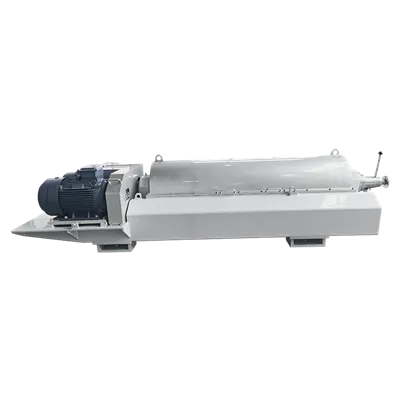
Sludge centrifuges are essential equipment in various industries, including wastewater treatment, food and beverage processing, and chemical manufacturing. As a sludge centrifuge supplier, I have in – depth knowledge of the common materials used in their construction. These materials play a crucial role in determining the centrifuge’s performance, durability, and resistance to the harsh environments in which they operate. Sludge Centrifuge
Stainless Steel
One of the most commonly used materials in sludge centrifuge construction is stainless steel. Stainless steel offers several advantages that make it an ideal choice. Firstly, it has excellent corrosion resistance. Sludge often contains various chemicals, acids, and alkalis, which can corrode ordinary metals quickly. Different grades of stainless steel, such as 304 and 316, are used depending on the specific application.
304 stainless steel is a general – purpose grade that provides good corrosion resistance in most non – aggressive environments. It contains approximately 18% chromium and 8% nickel, which form a passive oxide layer on the surface, protecting the metal from further corrosion. In sludge centrifuges used in less aggressive wastewater treatment plants where the sludge has a relatively low chemical content, 304 stainless steel can be a cost – effective option.
On the other hand, 316 stainless steel is more suitable for highly corrosive environments. It contains molybdenum, which enhances its resistance to pitting and crevice corrosion. In industries like chemical manufacturing, where the sludge may be highly acidic or contain chloride ions, 316 stainless steel is often the preferred material. It can withstand the corrosive effects of these substances over a long period, ensuring the longevity of the centrifuge.
In addition to corrosion resistance, stainless steel has high strength and good formability. This allows for the manufacture of complex centrifuge components with precision. The impellers, bowls, and casings of sludge centrifuges can be easily fabricated from stainless steel sheets or castings. The strength of stainless steel also enables the centrifuge to withstand the high rotational speeds and mechanical stresses during operation.
Carbon Steel
Carbon steel is another material that is sometimes used in sludge centrifuge construction, especially for the structural parts. Carbon steel is known for its high strength and relatively low cost. The frame and base of a sludge centrifuge are often made of carbon steel. These parts need to provide a stable support for the rotating components and withstand the vibrations and forces generated during operation.
However, carbon steel is not as corrosion – resistant as stainless steel. To protect it from corrosion, carbon steel components are usually coated with a protective layer. Paint coatings are commonly used, which provide a barrier between the steel and the surrounding environment. Epoxy coatings are also popular due to their excellent adhesion and chemical resistance. They can withstand the exposure to moisture and chemicals in the sludge handling environment.
In some cases, hot – dip galvanizing is applied to carbon steel parts. Galvanizing involves coating the steel with a layer of zinc, which acts as a sacrificial anode. The zinc corrodes preferentially, protecting the underlying steel. This method provides long – term corrosion protection, making it suitable for outdoor or harsh – environment applications.
Aluminum Alloys
Aluminum alloys are also utilized in certain parts of sludge centrifuges. Aluminum has a low density, which makes it lightweight. This is beneficial for components that need to rotate at high speeds, as it reduces the energy consumption of the centrifuge. The rotor of a small – to medium – sized sludge centrifuge may be made of an aluminum alloy.
Aluminum alloys also have good thermal conductivity. This property can be advantageous in some applications, as it allows for efficient heat dissipation during operation. In addition, aluminum alloys can be easily machined and formed into complex shapes, which is useful for manufacturing precision parts.
However, aluminum alloys have lower strength compared to stainless steel and carbon steel. They are also more susceptible to corrosion in some environments. To improve their corrosion resistance, aluminum alloy components can be anodized. Anodizing creates a hard, protective oxide layer on the surface of the aluminum, which enhances its resistance to wear and corrosion.
Polymeric Materials
Polymeric materials are increasingly being used in sludge centrifuge construction, particularly for seals and gaskets. These materials are chosen for their excellent chemical resistance and flexibility. For example, rubber materials such as nitrile rubber (NBR) and ethylene propylene diene monomer (EPDM) are commonly used for seals.
NBR has good resistance to oils, fuels, and many chemicals. It is widely used in applications where the centrifuge comes into contact with hydrocarbon – based substances. EPDM, on the other hand, has excellent resistance to weathering, ozone, and a wide range of chemicals. It is suitable for outdoor applications and in environments where the sludge contains a variety of chemicals.
Plastic materials like polypropylene (PP) and polyethylene (PE) are also used in some centrifuge components. They are lightweight, corrosion – resistant, and relatively inexpensive. For example, PP can be used to make some non – load – bearing parts, such as covers and small housings.
Ceramics
Ceramics are used in specific applications within sludge centrifuges. They are known for their high hardness, wear resistance, and chemical stability. In the case of sludge centrifuges, ceramic materials can be used for wear – resistant parts, such as the liners of the centrifuge bowl.
Sludge often contains abrasive particles, such as sand and grit, which can cause significant wear to the centrifuge components. Ceramic liners can withstand the abrasive action of these particles for a long time, reducing the need for frequent replacement. Additionally, ceramics are highly resistant to chemical attack, making them suitable for use in harsh chemical environments.
Titanium Alloys
Titanium alloys are a high – end material option for sludge centrifuge construction. Titanium has excellent corrosion resistance, even in highly aggressive environments such as those with strong acids or high concentrations of chloride ions. It is also very strong, yet lightweight.
In some specialized applications, such as in the pharmaceutical or aerospace industries where the sludge has extremely high – purity requirements or is highly corrosive, titanium alloy components may be used. However, titanium alloys are relatively expensive, and their fabrication requires specialized techniques.
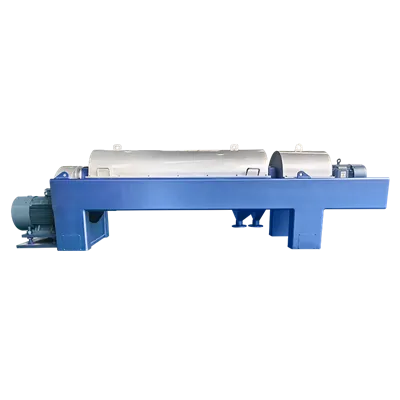
As a professional sludge centrifuge supplier, I understand the importance of choosing the right materials for each component of the centrifuge. The selection of materials depends on various factors, including the nature of the sludge, the operating conditions, and the budget. By using high – quality materials and advanced manufacturing techniques, we can ensure that our sludge centrifuges offer reliable performance, long service life, and cost – effective operation.
3 Phase Decanter Centrifuge If you are in the market for a sludge centrifuge and need more information about our products, or you have specific requirements for the materials used in the centrifuge construction, please feel free to contact us. We are more than happy to discuss your needs and provide you with the most suitable solutions.
References
- ASM Handbook Committee. (2004). ASM Handbook Volume 13C: Corrosion: Environments and Industries. ASM International.
- Callister, W. D., & Rethwisch, D. G. (2010). Materials Science and Engineering: An Introduction. Wiley.
- Schwenk, R. (2007). Centrifuges in the Process Industries. Springer.
Lishui Yuanrong Environmental Protection Equipment Co., Ltd.
As one of the most professional sludge centrifuge manufacturers and suppliers in China, we have world-leading production equipment and strong manufacturing capabilities. Please feel free to buy customized sludge centrifuge from our factory. Also, quotation is available.
Address: Lot 6-1, Block 15, Wanyang Zongchuang City, Lishui, Zhejiang, China
E-mail: 361184920@qq.com
WebSite: https://www.yrhdc.com/
