As a supplier of smart battery charging and swapping cabinets, I’ve witnessed firsthand the crucial role that communication protocols play in the efficient and safe operation of our products. These protocols are the backbone of the interaction between the cabinet, the batteries, and the management system, ensuring seamless data transfer and control. In this blog, I’ll delve into the various communication protocols used by smart battery charging and swapping cabinets, their functions, and why they are essential for the success of our solutions. Smart Battery Charging and Swapping Cabinet

Modbus Protocol
One of the most widely used communication protocols in industrial automation, Modbus, has also found its way into the realm of smart battery charging and swapping cabinets. Modbus is a simple and robust protocol that allows for easy communication between devices over a serial or Ethernet network. It uses a master – slave architecture, where the master device (usually the cabinet management system) sends requests to the slave devices (such as individual battery chargers or monitoring modules) and receives responses.
The advantage of using Modbus in our cabinets is its universality. Many battery management systems and charging modules support Modbus, which means we can easily integrate different components from various manufacturers. This flexibility allows us to build customized solutions for our customers, tailoring the cabinet to their specific needs. For example, if a customer requires a high – capacity charging station with a mix of fast and slow chargers, we can use Modbus to connect all these chargers to a central management system, enabling unified control and monitoring.
In addition, Modbus is known for its reliability. It has built – in error – checking mechanisms, such as cyclic redundancy checks (CRC), which ensure that the data transmitted between devices is accurate. This is crucial in the context of battery charging and swapping, where incorrect data could lead to overcharging, undercharging, or other safety hazards.
CAN Bus (Controller Area Network)
CAN Bus is another popular communication protocol in the automotive and industrial sectors that has been adopted in smart battery charging and swapping cabinets. CAN Bus is a serial communication protocol that allows multiple devices to communicate on the same network without a central controller. It is a multi – master protocol, which means any device on the network can initiate a communication session.
One of the key benefits of CAN Bus is its high reliability and real – time performance. In a battery charging and swapping cabinet, where rapid and accurate data transfer is required for safety and efficient operation, CAN Bus excels. For instance, during the battery swapping process, the cabinet needs to quickly communicate with the battery to determine its state of charge (SOC), health, and other parameters. CAN Bus can transmit this information in a matter of milliseconds, ensuring a smooth and safe swapping operation.
Moreover, CAN Bus is very robust and can withstand electrical interference. This is important in industrial environments where there may be a lot of electromagnetic noise. Our cabinets are often installed in busy urban areas or industrial sites, and CAN Bus ensures that the communication between the components remains stable even in such challenging conditions.
MQTT (Message Queuing Telemetry Transport)
In the era of the Internet of Things (IoT), MQTT has emerged as a leading communication protocol for smart devices. MQTT is a lightweight publish – subscribe protocol that is designed for low – bandwidth and unreliable networks. It uses a broker – based architecture, where devices can publish messages to a central broker and subscribe to messages from other devices.
For our smart battery charging and swapping cabinets, MQTT offers several advantages. Firstly, it enables remote monitoring and control. Our customers can access real – time data about the cabinet’s operation, battery status, and energy consumption from anywhere in the world using a web or mobile application. This is particularly useful for large – scale fleets of electric vehicles or in shared – mobility services, where operators need to manage multiple charging stations efficiently.
Secondly, MQTT is highly scalable. As our customers expand their operations and add more charging and swapping cabinets, the MQTT – based system can easily accommodate the increased load. The publish – subscribe model allows for easy integration of new devices and services, making it a future – proof solution for our customers.
TCP/IP (Transmission Control Protocol/Internet Protocol)
TCP/IP is the foundation of the Internet, and it is also used in smart battery charging and swapping cabinets to connect the cabinets to the cloud – based management system. TCP/IP provides a reliable, connection – oriented communication channel between the cabinet and the server, ensuring that data is transmitted accurately and in order.
By using TCP/IP, our cabinets can communicate with the cloud – based system over the Internet, enabling features such as remote software updates, data analytics, and predictive maintenance. For example, our management system can collect data from all the cabinets in a network and analyze it to identify patterns and potential issues. If a particular charger is showing signs of malfunction, the system can send an alert to the maintenance team, allowing them to take preventive action before a breakdown occurs.
Profibus
Profibus is a fieldbus protocol that is commonly used in industrial automation for communication between sensors, actuators, and control systems. In our smart battery charging and swapping cabinets, Profibus can be used to connect the various internal components, such as the power supply modules, temperature sensors, and charging controllers.
The main advantage of Profibus is its high data transfer rate and deterministic behavior. In a battery charging environment, where precise control and monitoring are required, Profibus ensures that the data is transmitted quickly and accurately. It also supports a large number of devices on the same network, which is useful for our cabinets that may have multiple charging slots and monitoring points.
Why These Protocols Matter
The choice of communication protocols in our smart battery charging and swapping cabinets is not arbitrary. These protocols are carefully selected to meet the specific requirements of the application, including reliability, real – time performance, scalability, and ease of integration.
Reliability is of utmost importance in battery charging and swapping. A single communication failure could lead to a malfunction in the charging process, which could damage the battery or even pose a safety risk. By using protocols like Modbus, CAN Bus, and TCP/IP, we ensure that the data transfer between the components is accurate and reliable.
Real – time performance is also critical. During the battery swapping process, the cabinet needs to make quick decisions based on the battery’s status. Protocols like CAN Bus and MQTT enable rapid data transfer, allowing the cabinet to respond in a timely manner.
Scalability is essential for our customers who may want to expand their operations in the future. MQTT and TCP/IP are highly scalable protocols that can easily accommodate the addition of new cabinets and devices to the network.
Ease of integration allows us to build flexible and customizable solutions for our customers. Modbus, in particular, is widely supported by different manufacturers, which means we can integrate a wide range of components into our cabinets.
Conclusion
In conclusion, the communication protocols used by smart battery charging and swapping cabinets are essential for the efficient, safe, and reliable operation of these systems. Modbus, CAN Bus, MQTT, TCP/IP, and Profibus are just some of the protocols that we use in our products, each with its own unique advantages.
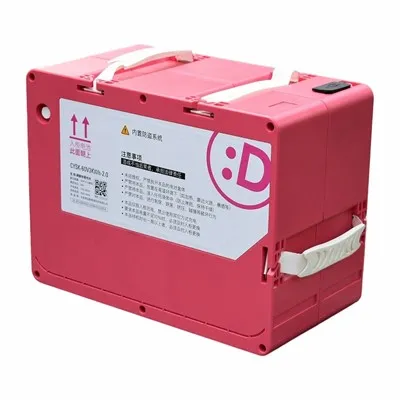
As a supplier of smart battery charging and swapping cabinets, we are committed to using the latest and most reliable communication technologies to provide our customers with the best possible solutions. Whether you are an electric vehicle fleet operator, a共享 – mobility service provider, or a business looking to deploy charging infrastructure, our cabinets can meet your needs.
Split Bridge Rear Axle-single Gear If you are interested in learning more about our smart battery charging and swapping cabinets or would like to discuss a potential procurement, please feel free to contact us. We look forward to working with you to build a more sustainable and efficient future.
References
- Modbus Organization. Modbus Protocol Specification.
- CAN in Automation (CiA). CAN Bus Protocol Documentation.
- Eclipse Foundation. MQTT Protocol Specification.
- Internet Engineering Task Force (IETF). TCP/IP Protocol Suite Documents.
- Profibus & Profinet International (PI). Profibus Protocol Documentation.
Jiangsu Changyun Drive Techniques Co., Ltd.
As one of the leading smart battery charging and swapping cabinet manufacturers and suppliers in China, we offer a wide range of products with superior quality. Please rest assured to wholesale advanced smart battery charging and swapping cabinet from our factory. If you have any enquiry about cooperation, please feel free to email us.
Address: Building B, 1st Floor, Chuangyan Port, Science and Education City, Wujin District, Changzhou City, Jiangsu Province
E-mail: eva@czbenma.com
WebSite: https://www.cyevenergy.com/
