What is the standard specification of JIS Flange?
If you’ve ever worked in piping systems, chemical plants, or heavy machinery manufacturing, chances are you’ve come across JIS flanges. As a supplier that’s specialized in Japanese Industrial Standard (JIS) flanges for over a decade, I get asked this question almost daily. New engineers, project managers, and even veteran industry professionals often want clarity on exactly what defines a JIS flange’s standard specification—especially when sourcing components that need to meet Japanese industrial benchmarks for compatibility, safety, and performance. Let me break this down in plain, practical terms that anyone in the procurement or engineering space can use. Jis Flange
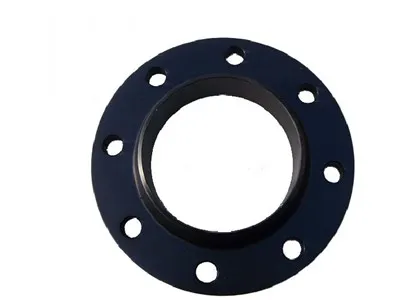
First, let’s start with the basics: JIS flanges are a set of standardized connection components developed by the Japanese Industrial Standards Committee, designed to join pipes, valves, pumps, and other equipment securely. Unlike some regional standards that vary widely, JIS specifications are consistent across Japan and adopted by many global industries that work with Japanese-made equipment or follow JIS requirements for their projects. But “standard specification” isn’t just one number or one dimension—it’s a layered set of rules that cover size, pressure rating, material, face type, and more. Let’s go through each part step by step.
The most fundamental part of a JIS flange specification is its nominal pipe size (NPS) or, in JIS terms, “Nominal Diameter (DN).” Wait, important to note: JIS uses DN (Diamètre Nominal) just like ISO standards, but sometimes you’ll see it paired with inch measurements that align with common piping practices. For example, a JIS 5K flange in DN 50 is the same as a 2-inch flange in imperial measurements. The DN range for JIS flanges typically starts at DN 10 (½ inch) and goes up to DN 2000 (80 inches)—that’s a huge range, so there’s a JIS specification for almost any piping project, from small industrial lines to large marine pipelines.
Next up: pressure rating, which is another core part of the standard. JIS flanges use pressure classes that are labeled as “K” instead of the ANSI’s “#” (pound) ratings. The most common pressure classes you’ll encounter in JIS standards are 5K, 10K, 16K, 20K, 30K, and 40K. Let me explain what that means in real terms: a 5K JIS flange is designed to handle a maximum working pressure of approximately 0.5 MPa (about 72.5 psi), a 10K is 1 MPa (145 psi), 16K is 1.6 MPa (232 psi), and so on. The higher the K number, the thicker the flange, the more bolts it uses, and the higher pressure it can withstand. I’ve seen too many projects where someone orders a 10K flange for a line that needs a 16K, and it leads to leaks or even failures down the line—so this part is non-negotiable for matching the specification to your application.
Then comes the flange face type, which is a critical often-overlooked part of the JIS specification. The face is the flat (or sometimes shaped) surface where the two flanges meet to create a seal. JIS standards define four main face types, each for different uses: Flat Face (FF), Raised Face (RF), Ring Type Joint (RTJ), and Tongue & Groove (T&G). Flat Face is the most basic, used for low-pressure, non-corrosive applications where alignment is simple. Raised Face is the most common for industrial piping—it has a small raised ring in the center to compress a gasket, creating a tight seal. Ring Type Joint is for high-pressure, high-temperature applications (like refineries or boilers) where a metal gasket is used instead of rubber or synthetic ones. Tongue & Groove is for applications that require extreme sealing, such as in chemical processing where leaks can be hazardous. The JIS specification dictates the exact dimensions for each face type—down to the diameter of the raised ring or the depth of the tongue—so you can’t mix and match; a JIS RF flange won’t seal properly with an ANSI RF face, even if the pressure and size match.
Material specification is another key component. JIS flanges are made from a range of materials, each with its own standard specification to ensure compatibility with the fluid being transported. For carbon steel flanges, the most common JIS standards are SS400 (general structural carbon steel), SS490 (high-strength carbon steel), and S25C (medium carbon steel for higher strength). For stainless steel flanges, you’ll see SUS304 and SUS316—the JIS equivalents of AISI 304 and 316, which are widely used for corrosive fluids like acids or saltwater. There are also alloy steel flanges for high-temperature applications (like F11 or F22 alloy steels) and non-ferrous flanges, such as brass or bronze, for low-pressure, sanitary applications. One thing I always tell customers: never just ask for a “JIS flange”—specify the material grade, because SS400 and SUS304 are two completely different components.
Bolt hole dimensions and bolt circle diameter make up the mechanical specification too. The JIS standard defines the exact number of bolt holes, their diameter, and the diameter of the circle they’re arranged on (the bolt circle, or BCD) for each size and pressure class. For example, a DN 50 (2-inch) 10K JIS flange has 4 bolt holes, each 18mm in diameter, and a bolt circle diameter of 140mm. If you’re replacing a flange, you can’t use a flange with 2 bolt holes or a 150mm BCD—it won’t line up with your existing piping. This is where having a reliable supplier matters: we cross-reference the JIS standard for each size to make sure every flange we ship matches the exact bolt hole specs, so you don’t have to do extra work to modify it.
Wait, there’s also the difference between welded neck (WN), slip-on (SO), blind (BL), and socket weld (SW) flanges—all defined in JIS standards. These are the types of flanges, based on their design. Welded neck flanges are the strongest, designed for high-pressure applications where the flange is welded directly to the pipe’s end, reducing stress concentration. Slip-on flanges are cheaper and easier to install, used for low-pressure lines. Blind flanges are solid, used to close off the end of a pipeline. Socket weld flanges are for small-bore pipes (DN 50 or smaller) where the pipe fits into a socket, then is welded. The JIS standard specifies dimensions for each of these designs, so even if two flanges are the same DN and K, a WN and a SO flange will have different outer diameters and flange thicknesses.
I’ve worked with thousands of customers, from small fabrication shops to large construction firms, and one of the most common mistakes is misunderstanding that JIS flanges aren’t just “flanges that follow Japanese rules”—they have specific, testable specs. For example, JIS B2220 is the main standard that covers steel flanges, right? Let me confirm that: yes, JIS B2220 is the core standard for steel pipe flanges, and it includes all the specs I mentioned: DN, K pressure classes, face types, dimensions, and material requirements. There are also other JIS standards for flanges made from other materials, like JIS B2230 for stainless steel flanges and JIS B2240 for non-ferrous flanges, but JIS B2220 is the one you’ll encounter most often.
Another point: dimensional tolerance. The JIS standard doesn’t just give a nominal size—it specifies how much a flange can vary from that size. For example, the outer diameter of a DN 100 (4-inch) 10K JIS flange should be 210mm, with a tolerance of +0.5mm and -0mm. That precision is important for gasket fit and bolt alignment. If a flange is too small, the gasket won’t seat properly; if it’s too big, the flange might not fit into the piping space allocated for it.
Now, why does this matter for a supplier like me? Because we don’t just pull a flange off the shelf and ship it—we have to verify that every flange we stock meets JIS B2220 specs. That means inspecting raw materials to make sure they match the correct grade, machining flanges to the exact dimensions, testing pressure ratings before shipment, and checking bolt hole alignment. I’ve had customers come to us after buying generic flanges from a supplier that claimed to be JIS compliant, only to find that the bolt holes were off by 2mm, or the pressure rating was lower than marked. That leads to delays, cost overruns, and even safety issues. So as a JIS flange supplier, my job isn’t just to sell parts—it’s to make sure those parts meet the standard specifications that the industry relies on.
Let me give a real example of how this plays out in a project. Last year, a chemical plant in Southeast Asia needed 20 JIS 16K flanges for a new line transporting corrosive chemicals. They originally tried a local supplier, but the flanges arrived with a stainless steel grade that wasn’t SUS316—it was a lower-grade steel that corroded within a month. They contacted us, and we shipped JIS B2230-compliant SUS316 flanges, with exact DN 100, 16K specifications, RTJ face type, and the correct bolt hole dimensions. Those flanges have been in use for over a year with no issues. That’s the difference between a compliant JIS flange and one that just has the right label.
Another common question: are JIS flange specifications compatible with other standards, like ANSI or DIN? The short answer is, sometimes, but not always. For example, a JIS 10K flange in DN 50 has a similar outer diameter and bolt circle to an ANSI 150 flange in 2 inches, so they can sometimes be used interchangeably, but the face type and pressure rating specs might differ. A JIS RF face is slightly different from an ANSI RF face, so even if the size matches, the gasket might not seal correctly. That’s why it’s always best to stick to JIS specs when your project requires compliance with Japanese standards—don’t assume cross-compatibility.
Let’s summarize the core elements of a JIS flange standard specification, so you have a clear checklist:
- Standard reference: Which JIS standard it follows (most often JIS B2220 for carbon steel, JIS B2230 for stainless steel).
- Nominal Diameter (DN): The pipe size it’s designed to connect (from DN10 to DN2000).
- Pressure class (K rating): The maximum working pressure (5K, 10K, 16K, etc.).
- Face type: Flat Face, Raised Face, Ring Type Joint, or Tongue & Groove.
- Flange type: Welded Neck, Slip-On, Blind, Socket Weld, or Lap Joint.
- Material grade: The specific material (SS400, SUS304, SUS316, etc.).
- Mechanical dimensions: Bolt hole count, diameter, bolt circle diameter, outer diameter, flange thickness, and dimensional tolerances.
Every one of these elements is part of the JIS standard specification, and missing any one can lead to a part that doesn’t work for your application. As someone who’s been in this industry for years, I can tell you that a lot of frustration in piping projects comes from not fully understanding these specs. That’s why we make it a point to walk customers through each of these points when they’re ordering—no hidden fine print, no vague labels.
If you’re working on a project that requires JIS flanges, whether it’s a new installation, a replacement, or a custom build, make sure you’re clear on all these specification points. Don’t just tell your supplier “I need JIS flanges”—provide the DN, K rating, face type, material, and flange type. That way, you get a part that meets the standard, fits your piping, and performs as expected.
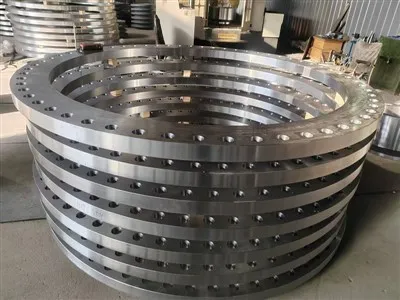
For procurement teams and engineers, remember that JIS flanges are designed for consistency and reliability. The standard specifications exist to ensure that when you install a JIS flange, it will connect properly, withstand the pressure and temperature of your application, and last as long as it’s supposed to. As a supplier, our job is to uphold those specs—we don’t cut corners on material, dimensions, or testing, because we know how critical these parts are to your project.
Flange If you have questions about JIS flange specifications, need help verifying a part, or are ready to place an order for compliant JIS flanges for your project, reach out to our team to discuss your requirements. We can provide detailed specification sheets for any flange we stock, answer questions about material grades or pressure ratings, and make sure you get exactly what you need for your application. Don’t settle for parts that don’t meet the standard—let us help you source JIS flanges that are built to the exact specifications required for your piping systems.
References
- Japanese Industrial Standards Committee. (2018). JIS B2220: Steel Pipe Flanges.
- Japanese Industrial Standards Committee. (2020). JIS B2230: Stainless Steel Pipe Flanges.
- Piping Engineering Handbook. (2022). Standard Specifications for Industrial Flanges, 5th Edition.
- Japan Fluid Power System Society. (2021). Compatibility Guide for JIS Standard Flanges.
Shanxi Xinshunda Flange Manufacturing Co., Ltd.
As one of the most professional jis flange manufacturers and suppliers in China, we also support customized service with competitive price. We warmly welcome you to wholesale high quality jis flange for sale here from our factory. For quotation, contact us now.
Address: Zhunagli Industrial Zone,jinchang Town,dingxiang,shanxi,china
E-mail: sales01@xinflange.com
WebSite: https://www.xinflange.com/
