What Is the Shelf Life of EAB Tape? A Supplier’s Guide to Understanding Longevity, Storage, and Performance EAB Tape

If you’ve ever worked with industrial adhesive tapes—whether for packaging, building construction, automotive assembly, or general manufacturing—you know how critical it is that your materials perform as intended when you need them. Nothing kills a project timeline faster than opening a roll of tape that’s lost its stick, or worse, fails mid-application because it’s past its prime. That’s why one of the most common questions I get as an EAB Tape supplier is this: “What’s the actual shelf life of EAB Tape, and how do I make sure I’m getting the most out of my inventory?”
EAB Tape—short for Expansion Acrylic Butyl Tape, a versatile pressure-sensitive adhesive (PSA) product designed to bond to a wide range of surfaces, create watertight seals, and resist environmental stress—has a reputation for durability. But like all adhesives, it’s not immune to the effects of time, improper storage, and environmental exposure. Over my 12 years in the adhesive supply business, I’ve fielded everything from small business owners asking how long a 10-roll pack will last, to construction project managers verifying shelf life before placing a bulk order for a new commercial build. Let’s break down the science, the numbers, and the best practices from someone who sees this product go in and out of warehouses every single day.
First, let’s get the basics straight: the stated shelf life of EAB Tape is not a random number printed on the box. It’s a tested, industry-standard metric that tells you how long the product will retain its key properties—adhesion, tensile strength, and seal integrity—when stored under optimal conditions. For most commercial-grade EAB Tape, that number is 12 to 18 months from the date of manufacture. But that’s not a one-size-fits-all rule. That range shifts depending on the type of EAB Tape you’re working with, the backing material, and how you store it.
Wait, what are the different types of EAB Tape, and how does that affect shelf life? Let’s simplify this. EAB Tape is formulated with a butyl rubber adhesive base, mixed with acrylic modifiers to boost bond strength and resistance to UV, moisture, and temperature swings. The backing can be polyethylene (PE), polypropylene (PP), or even fiberglass mesh for heavy-duty applications. Light-duty EAB Tape, often used for household repairs or light packaging, has a 12-month shelf life. Heavy-duty industrial EAB Tape, which we supply for things like HVAC duct sealing, roofing flashing, or marine applications, has a slightly longer 15 to 18-month shelf life. Why? The heavier-duty formulations use a higher concentration of acrylic modifiers and thicker backing materials, so they’re engineered to resist degradation longer. That’s something I make a point of clarifying with every customer: don’t assume all EAB Tape is the same. If you’re buying for a critical application—like a rooftop seal that needs to hold for 10 years—you’ll want to go with the industrial-grade variant, which not only has a longer shelf life but also better long-term performance once applied.
Now, here’s the part most customers don’t know: the stated shelf life assumes proper storage. If you leave a roll of EAB Tape in the back of a hot warehouse, or stacked in a damp corner of a shipping container, that 12-month clock starts ticking faster. Adhesives are polymer-based materials, and polymers break down over time due to what’s called “aging”—a chemical process where molecular bonds weaken, and the adhesive loses its ability to stick to surfaces. Environmental factors speed this process up significantly. Let’s walk through what that means in real terms.
Temperature is the biggest culprit for premature degradation. EAB Tape should be stored in a temperature-controlled environment, between 50°F and 77°F (10°C and 25°C). If stored above 90°F (32°C), the adhesive can start to break down within 6 months, even if it’s unopened. I’ve seen this firsthand: a customer once stored a 50-roll pallet of EAB Tape in a non-air-conditioned warehouse in Arizona over the summer, and when they opened it 8 months later, half the rolls had adhesive that oozed out from the edges—completely useless. Conversely, cold storage isn’t great either. Temperatures below 40°F (4°C) can make the adhesive too stiff, so when you apply it, it won’t conform to rough surfaces as well, leading to weak bonds. That’s not a permanent issue—you can bring cold-stored tape to room temperature for 24 hours before use to fix it—but it does impact shelf life if stored long-term in cold conditions.
Moisture is another silent enemy. EAB Tape is water-resistant, not waterproof when left unprotected in high humidity or standing water. If rolls are stored in a damp environment, the adhesive can absorb moisture, which weakens the bond between the adhesive and the backing, and also creates tiny air pockets that can ruin the seal when applied. I always advise customers to store EAB Tape on pallets off the ground, away from exterior walls or leaky pipes, and in areas with relative humidity between 40% and 60%. That’s not just a guess—that’s the recommended condition from the adhesive polymer manufacturers we work with, and it’s what we follow in our own warehouses to ensure our stock stays fresh.
Light exposure, specifically UV light, also plays a role. EAB Tape is formulated to resist UV degradation once applied, but unopened rolls stored in direct sunlight will see their adhesive break down faster. UV rays break down polymer chains, so a roll left in a loading dock or a warehouse window will lose its adhesion properties months earlier than a roll stored in a dark, dry area. That’s a mistake I see all the time: customers leave tape shipments on the truck dock to unload in the middle of the day, and by the time they bring it inside, a few hours of sun have damaged the product.
Now, what about once you open the roll? Does the shelf life change? The answer is a little different here. Once you unroll EAB Tape and expose it to air, the adhesive starts to react with oxygen, which can slightly reduce its shelf life. But that’s only if you don’t re-seal the roll properly. If you wrap the unused portion in plastic or store it in an airtight bag to keep moisture and oxygen out, the opened roll will retain its properties for up to 3 months. If you just leave the cut end hanging out, it might only last a few weeks before it’s too dry or too sticky to work with. I recommend cutting only the amount you need for a project, and storing the rest in a sealed container. It’s a small step, but it saves you from wasting half a roll that cost you $10 or more.
Let’s talk about how to test if your EAB Tape is still good before you use it. Even if the date on the box is within the stated shelf life, it’s smart to do a quick test, especially if you’ve had the tape in storage for a while. Here’s what I tell all my customers: first, check the appearance. The adhesive should be smooth, not cracked, crumbly, or oozing. If you unroll a few inches, the adhesive should come off the backing evenly, without leaving residue on the backing or breaking apart. Then, do a small adhesion test: pick a surface similar to the one you’ll be using the tape on—metal, plastic, wood, whatever—and press a 2×2 inch piece of tape firmly onto it, pulling off any air bubbles. Leave it for 24 hours at room temperature, then try to peel it off. If it leaves a lot of residue, or the tape comes off easily, it’s past its prime. If it’s a strong bond that doesn’t leave residue, it’s still good. This test takes 2 minutes, and it’s way better than finding out a roll is bad mid-project when you can’t run back to the store.
Now, why does this matter for you as a buyer? If you’re a small business owner, buying in bulk to save money might seem like a good deal, but if you store the tape incorrectly or it expires before you use it, you’re throwing money away. Let’s do the math: if a 10-roll pack of industrial EAB Tape is $150, and it expires 18 months after manufacture, and it takes you 12 months to use the pack because of poor storage, you’re not saving anything. In fact, you’re wasting $50 on tape that’s no longer effective. On the flip side, buying the right type of EAB Tape for your application and storing it properly means you’ll get the full value of the product, and your projects will go off without a hitch.
As a supplier, I also want to be transparent with you about what we do to ensure you’re getting fresh product. Every roll we ship has a manufacture date printed directly on the box—no vague “best by” dates that are hard to track. We store our inventory in climate-controlled warehouses, so every roll we send is at most 3 months old, and often newer. We also offer smaller minimum order quantities for customers who don’t need bulk, so you don’t have to buy more than you can use before it expires. I’ve turned down large bulk orders from customers who had a history of letting inventory sit for over a year, because I didn’t want them wasting money on product that would degrade before use. That might not sound like great business, but it’s the right thing to do for a long-term relationship.
Let’s also address a common misconception: some customers think if the tape is a little old, they can just apply more pressure when they use it to make up for lost adhesion. While applying proper pressure when applying EAB Tape is important (it’s a pressure-sensitive adhesive, after all), it won’t fix a roll that’s already degraded. If the polymer chains are broken, no amount of pressure will bring them back together. That’s another reason it’s so important to track your inventory and use the tape within the shelf life.
So, to wrap this up: the shelf life of EAB Tape is approximately 12 to 18 months from manufacture, depending on the grade, when stored in optimal conditions (50-77°F, 40-60% humidity, dark, off the ground). Light-duty variants have a 12-month shelf life, industrial heavy-duty has 15-18 months. Proper storage is key to making sure you hit that timeline, and a quick adhesion test can confirm if a roll is still good.
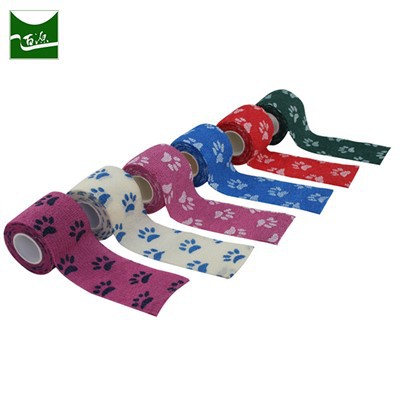
If you’re working on a project—big or small—and need EAB Tape that’s fresh, reliable, and matched to your application, don’t guess. Reach out to us to discuss your needs, and we’ll help you choose the right grade, calculate how much you need to avoid waste, and even offer storage tips to make your inventory last as long as possible. We’re here to make sure your adhesive tapes perform when you need them, no surprises.
Medical Tape References
- Adhesive and Sealant Council. (2022). Shelf Life Guidelines for Pressure-Sensitive Adhesive Products.
- International Organization for Standardization. (2021). ISO 11601: Adhesive Tapes for Building and Construction—Determination of Shelf Life.
- BISFA (The International Bureau for the Standardization of Man-Made Fibers). (2020). Aging Characteristics of Butyl-Based PSAs for Industrial Applications.
- Construction Industry Institute. (2019). Best Practices for Storage of Construction Adhesives and Tapes.
Wuxi Beyon Medical Products Co., Ltd.
Address: NO.8 HUAYOU(1ST) RD, XINWU DISTRICT,WUXI,JAINGSU,CHINA
E-mail: simon@beyoncn.com
WebSite: https://www.tapeandband.com/
