If you’re a plant manager, maintenance technician, or procurement lead, you’ve probably faced the same gut punch: a globe valve that’s sputtering, leaking, or failing mid-cycle, and the immediate question—should I replace it, or can I repair it? As someone who’s worked as a globe valve supplier for over a decade, I field this question at least three times a week, from refineries in the Gulf to food processing plants in the Midwest, from small machine shops to large-scale chemical facilities. The short answer is: yes, a globe valve can almost always be repaired—if you approach it the right way. Too often, I see people jump to replacement because they assume any valve issue means a full swap, but that’s rarely the case. Globe valves are workhorses, designed for throttling and shutoff, with modular parts that are built to be serviced. Let’s break down the science of globe valve repair, when it makes sense, when it doesn’t, and how to do it right. Globe Valve
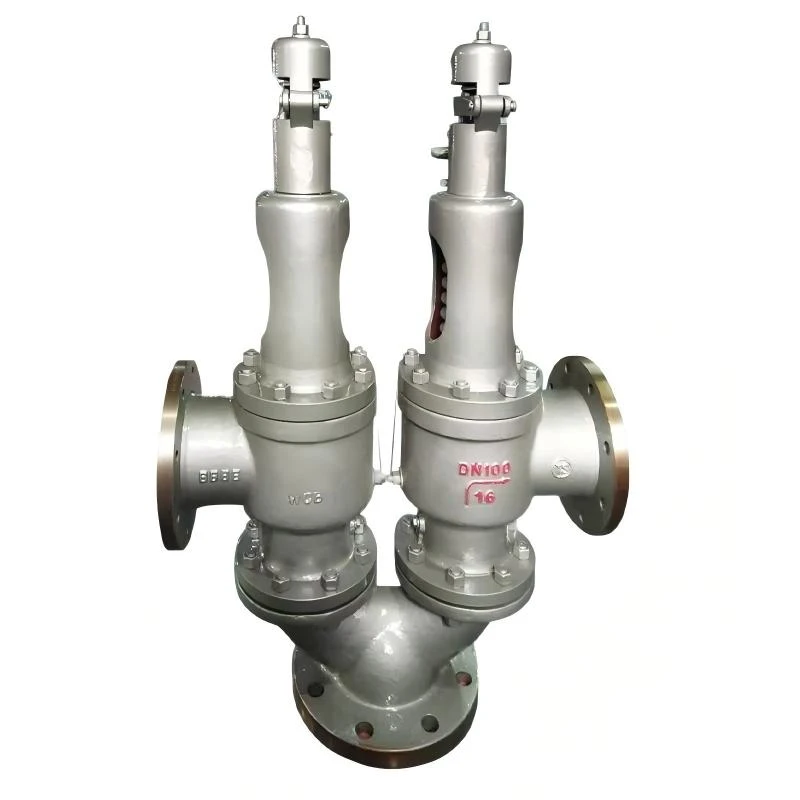
First, let’s get aligned on what a globe valve is, because that core design is exactly why repair is feasible. Unlike ball valves or gate valves, which use a rotating ball or sliding wedge to stop flow, a globe valve uses a movable disk (the closure element) that presses against a stationary ring (the seat) inside the valve body, guided by a stem connected to an actuator or handwheel. That simple, linear design means most failures happen at the point where the two most common wear occurs: the disk and the seat. Those are not integral parts of the valve body, so they’re replaceable. That’s the foundation of repair. The valve body itself is cast iron, carbon steel, or stainless steel, and it’s engineered to withstand high pressure and temperature cycles for years. It’s rare for a valve body to fail—usually only if there’s a massive corrosion event, physical impact that cracks the casting, or extreme water hammer that warps the interior walls.
The most common causes of globe valve issues are all repairable, and I see these every single week. Let’s start with the number one problem: seat and disk wear. Over time, even with the best lubrication and fluid filtration, particulates in the process fluid (sand, rust, catalyst fines in refineries, product particles in food plants) will abrade the mating surfaces of the disk and seat. When that happens, you get leakage—either external leakage past the stem packing, or internal leakage through the seat when the valve is supposed to be shut. Another frequent issue is stem damage. The stem moves up and down thousands of times, so it can get bent, corroded, or worn where the packing (the seals around the stem) sit. If the stem is bent, that throws the disk out of alignment with the seat, which causes uneven wear and leakage. Then there’s stem packing failure: the packing (usually a braided material like PTFE, graphite, or asbestos) compresses around the stem to prevent fluid from leaking out of the valve body. Over time, it dries out, compresses too much or too little, and starts to leak. Even actuator issues count, but here’s the thing: most of these parts are standard, replaceable, and far cheaper to fix than a full valve swap.
Now, let’s talk about what can’t be repaired, because that’s where a lot of people get confused. If the valve body itself is cracked, corroded through, or has a major warp, replacement is the only option. A body that’s rusted so thin it can’t hold pressure, or cracked from a pressure surge, isn’t safe to repair—welding a cracked valve body can introduce stress points that lead to catastrophic failure down the line. Another non-repairable issue is extreme stem thread damage. If the threads on the stem are stripped, cross-threaded, or severely corroded so the disk can’t move properly, replacing the stem is usually better, but in some cases, if the stem’s threaded end is the only damaged part, you can machine a new end on a spare stem, but that’s more specialized. Wait, no—actually, most of the time, a stripped stem means replacement, because machining a new end can compromise the stem’s structural integrity. Also, if the valve’s bonnet (the part that connects the body to the stem/actuator) is cracked, that’s a replacement part in some cases, but if the bonnet is integral to the body, then you have to replace the whole valve.
Let’s dive into the repair process, because it’s not just a matter of changing a disk. I’ll walk you through the standard process we recommend for our customers, because we supply OEM parts, so we know exactly what’s needed. First, you have to isolate the valve and depressurize the line—this is non-negotiable for safety, and if you skip this, you can get hurt. Next, remove the actuator, then unbolt and remove the bonnet from the valve body. Once the bonnet is off, you can pull the stem and disk assembly out. Now, inspect every part: first, check the disk and seat. Run your fingernail (or a straight edge, if you’re dealing with metal) along the seat ring. If you feel a groove or uneven wear, that’s a problem. For minor abrasion, you can lap the disk and seat—use a fine lapping compound (usually aluminum oxide or diamond grit) to grind the two mating surfaces back to a perfect seal. For more severe wear, you need to replace the seat and disk. That’s a standard OEM part, so you don’t have to buy a whole valve.
Next, check the stem. Run your hand along the stem; if it’s bent, you can straighten it on a press, but if it’s corroded or has deep scratches over 0.005 inches deep, replace it. Scratches that deep will damage the packing and cause external leakage. Then, inspect the packing: if it’s compressed, dried out, or has broken fibers, you can repack it. That’s a simple process—remove the old packing, cut new packing rings to fit, and compress them evenly so there’s no too-tight (which will wear the stem) or too-loose (which will leak) fit. Finally, clean the valve body’s interior, especially the seat area, to remove any debris that could cause new wear. Once all that’s done, reassemble the valve, test it for leakage at low pressure, and put it back in service.
I want to be clear: not all globe valves are created equal, and repair should be tailored to the valve’s size, application, and age. For example, a 2-inch bronze globe valve in a residential water line that’s 20 years old and leaking is probably cheaper to repair than replace, but a 12-inch Class 1500 globe valve in a chemical plant that’s 30 years old with a cast steel body that has minor corrosion—repair makes total sense. But if that same 12-inch valve is from a cheap, non-OEM manufacturer, the seat and disk aren’t standardized, so replacement parts might not be available, and repair would be more expensive than a new valve. That’s why working with a trusted supplier matters—we have OEM parts for every globe valve we’ve ever supplied, and we can tell you which repairs are feasible based on your valve’s specs.
I see a common misconception from people who worked with gate valves, where repair is often less practical. Gate valves have a wedge that can wear, but their design means internal leakage is more common, and their parts are sometimes harder to source. Globe valves, on the other hand, have standardized disk and seat sizes for most common classes (150, 300, 600), so even if your valve is 10 years old, replacement parts are easy to get. Another example: last year, a customer in a food processing plant called me because their 3-inch globe valve for a pasteurization line was leaking. We walked them through the repair: they replaced the PTFE disk (which had worn from acidic milk product), repacked the stem with food-grade graphite packing, and tested it. The repair cost them $120, versus a new valve that would have cost $850. That’s a no-brainer.
Now, when does repair not make financial or practical sense? Let’s outline the red flags. First, if the valve body has visible cracks, pitting, or corrosion that’s more than 10% of the body’s thickness. Welding a corroded body can weaken it, and if it’s already thin, it might burst under pressure. Second, if the valve is from an unknown manufacturer and replacement parts aren’t available. Cheap valves often have non-standard parts, so trying to repair them means custom machining, which ends up being more expensive than a new, OEM valve. Third, if the valve is at the end of its design life. Most globe valves have a 15-20 year service life, depending on the application. If your valve is 25 years old, and it’s having repeated issues even after repair, replacement is better to avoid unplanned downtime. Fourth, if the valve is used for a critical application where failure is catastrophic. For example, a globe valve on a high-pressure steam line for a power plant—if repair is a marginal call, some customers opt for replacement to eliminate any risk, and that’s a valid business decision.
I’ve also had customers ask if rebuilding a globe valve is the same as repair. The short answer is: rebuilding is a type of major repair, where you replace almost all the internal parts (disk, seat, stem, packing) and sometimes resurface the valve body’s seat area. It’s a good option for valves that are still in good shape structurally, but have significant wear. Rebuilding is often done in a workshop, and it can extend a valve’s life by another 10+ years, which is way more cost-effective than replacing it.
What about common mistakes people make when trying to repair a globe valve? Let’s list a few, because these lead to failed repairs and unnecessary replacement. First, not cleaning the valve properly before disassembly. Debris left inside the valve body can scratch new disk and seat parts, leading to early leakage. Second, using the wrong lapping compound. Using a compound that’s too coarse will leave deep scratches, too fine won’t remove enough wear. Third, not compressing the packing evenly. If you tighten the packing gland bolts too much on one side, the stem will bind, causing the valve to not open or close fully. Fourth, mismatching the disk and seat. Some people use a disk from a different valve size, which doesn’t fit properly, leading to leakage. That’s why using OEM parts is key—we supply exact matches for every valve, so you don’t have to guess.
As someone who’s spent years supplying globe valves, I’ve seen the costs of skipping repair. Unplanned downtime from a failed valve can cost a plant thousands of dollars per hour. A $100 repair is nothing compared to the cost of a production shutdown. But I’ve also seen companies waste money on unnecessary valve replacements, when a $200 repair would have worked just as well. The key is to assess the valve’s condition first. If you’re not sure whether your globe valve can be repaired, the best step is to work with a supplier who knows globe valves. We can help you inspect the valve, identify the issue, and advise you on whether repair is feasible, or if replacement is a better call.
To wrap this up: yes, a globe valve can almost always be repaired, as long as the valve body is in good condition and the parts that are wearing (disk, seat, stem, packing) are standard and replaceable. Globe valves are designed for service, with modular parts that are easy to source and install, making repair a far more cost-effective option than replacement in most cases. The exception is when the valve body is damaged beyond repair, or the valve is at the end of its service life. When in doubt, don’t guess—reach out to a trusted globe valve supplier to get the right advice.
If you’re dealing with a leaking, failing, or underperforming globe valve and want to get expert guidance on repair options, have questions about OEM replacement parts, or want to discuss sourcing new valves for your application, feel free to get in touch to schedule a consultation and discuss your specific needs.
Butterfly Valve References
- The American Society of Mechanical Engineers (ASME). (2019). B16.34: Valves – Flanged, Threaded, and Welding End. ASME International.
- Miller, J. (2021). Valve Repair and Maintenance: A Practical Guide for Industrial Facilities. Industrial Press.
- Fluid Controls Institute. (2020). Best Practices for Globe Valve Service and Repair. Fluid Controls Institute.
- Spitzer, D. (2018). Industrial Valves: Selection and Application (3rd ed.). ISA Press.
Wenzhou Starry Valve Co., Ltd.
Wenzhou Starry Valve Co., Ltd. is one of the most professional globe valve manufacturers and suppliers in China, also supports customized service with low price. Please feel free to buy the newest globe valve made in China here from our factory. Welcome to contact us for pricelist.
Address: No.4900, 3rd Road, Binhai Industrial Park, Wenzhou Economic & Technological Development Zone, Wenzhou City
E-mail: starryvalves@163.com
WebSite: https://www.starryvalves.com/
