Hey everyone, if you’ve ever worked in manufacturing, automotive, aerospace, or even the maker space, you’ve probably heard the term “custom mechanical part” thrown around. But let’s be real—most folks outside our little world have no clue what that actually means, and even some folks inside might be mixing it up with off-the-shelf junk. As a mechanical parts supplier, I deal with custom parts every single day, and today I’m breaking it down like I would to a new client who just slid into my DMs asking, “Wait, why can’t I just buy this at Home Depot?” Mechanical Parts
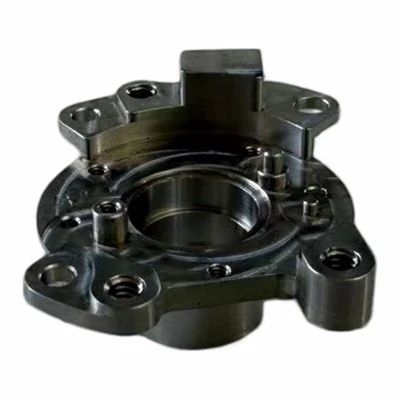
First off, let’s kill the confusion: a custom mechanical part isn’t just a regular part with a weird shape. It’s a component that’s designed, engineered, and manufactured specifically to fit one unique use case—no one else is making this exact thing for mass distribution, and stock parts will never do the job. Let’s use a real example I dealt with last month: a small aerospace startup needed a bracket to hold a sensor on their new satellite’s navigation system. Off-the-shelf brackets were either too flimsy, too heavy, or didn’t line up with the tiny, irregular mounting points on their custom sensor. The customer tried cutting and sanding a standard steel bracket, but it warped in the vacuum test and broke during vibration checks. That’s where custom comes in. We engineered that bracket in CAD (computer-aided design, if you don’t know the lingo) to match exactly their specs—every curve, every hole, every weight limit—and made it out of a lightweight, heat-resistant aluminum alloy they couldn’t get in a stock part. That’s a custom mechanical part, no fancy fluff.
Wait, but how is that different from a “custom tool” or a “one-off prototype”? Great question. I get this all the time. Prototypes are usually test runs—you make one or two to see if a design works. A custom part is a production component, built to be used repeatedly in a final product, not just tossed after a trial. For example, a small batch manufacturer of electric bikes might need a custom gear for their mid-drive motor. A prototype gear is just for testing the motor; a custom part is the exact gear that goes on every bike they ship to customers. That’s the key difference: custom parts are production-worthy, not just proof-of-concept.
Now, let’s talk about why someone would go custom instead of grabbing a stock part. Let’s break down the big reasons, none of which are “we like to overcomplicate things.” First, performance. If you’re building something that has to work under extreme conditions—like a wind turbine blade pitch part that’s exposed to 100+ mph winds and -40°F temperatures, or a medical device part that has to be sterile and precise enough to go inside a human body—stock parts can’t cut it. Stock parts are made for general use, so they’re a compromise. A custom part is optimized for your exact load, environment, and function. Take that wind turbine part: we made a custom steel component with a specialized coating that resisted corrosion way better than any off-the-shelf part, because the client was losing $10k+ every time a turbine shut down due to a corroded stock part. That’s the payoff.
Second, fit. Sometimes, even if a stock part works okay, it doesn’t fit your existing design without modifying everything else. Let’s say a maker is building a custom old-school hot rod and needs a brake line fitting that connects a modern master cylinder to a vintage caliper. Stock fittings are either too long, too short, or have the wrong thread pitch. The maker could modify the caliper or the master cylinder, but that would weaken the original parts and mess up the car’s safety. A custom fitting? Made to match both, so it bolts right in, no hacks needed. And safety isn’t a joke here—bad fitments cause brake failures, which are deadly. That’s a big reason customers reach out to me, not just for convenience, but for safety.
Third, intellectual property (IP). If you’re building a product that’s totally unique, you don’t want some competitor grabbing a cheap stock part that looks almost like yours, copying it, and undercutting your price. Custom parts are exclusive—we don’t share designs with other clients, and most of our contracts include IP clauses that make sure your custom part is yours and yours alone. A small drone startup we worked with last year had a unique propeller mount that they refused to make stock; if that mount was available everywhere, big tech companies would copy their whole drone design in a month. Custom parts let you keep your product one-of-a-kind.
But wait—isn’t making a custom part expensive? Yeah, sometimes, if you go about it wrong. I see customers waste money all the time by jumping straight to manufacturing without doing their homework. The best custom part projects start with a clear brief. What are the load requirements? What material works best (plastic, steel, aluminum, titanium)? How many units do you need? A lot of small clients think custom is only for big corporations with million-dollar budgets, but no—we’ve made custom parts for 50-unit runs for small manufacturers and even 5-unit runs for makers who have a unique project. The key is working with a supplier who walks you through it, not just slaps a price tag on a CAD file.
Let me walk you through the process, because that’s what makes custom parts actually work. First, the consult: you tell us what you need. No, not just “make me a bracket”—be specific. “I need a bracket that holds a 2oz sensor, fits in a 1x1x0.5 inch space, can handle 5lbs of pull force, and doesn’t weigh more than 0.1oz total.” The more details, the better. Then we do the design: our engineers build a 3D model, share it with you to check for fit, tweak until it’s perfect. Then we prototype—usually 1-2 test parts to make sure it works when you test it in your actual setup. Then, once you sign off, we manufacture the full batch, using processes like CNC machining, 3D printing for small runs, or casting for bigger orders. And we handle quality checks, so every part is exactly to spec. No surprises.
I’ll be honest, there are some times when custom isn’t the way to go. If you need 1000 identical bolts for a standard assembly, a stock bolt is way cheaper and faster. If you’re testing a new idea and only need one part to see if it works, a 3D printed prototype is better than a custom production part. The trick is knowing when stock cuts it and when you need custom. That’s what we’re here for—we don’t push custom parts on people who don’t need them, because we want long-term clients, not one-off jobs.
Last quarter, we had a client who came to us with a project that started as a maybe-custom job. They were building a portable water filter for hikers, and needed a valve that controlled water flow. The stock valve they were using leaked when the filter was under pressure, so they thought they needed a custom valve. We tested the stock valve in their actual filter setup and realized the problem was a tiny gap in the seal, not the valve itself. We suggested a custom O-ring to fix that gap—super cheap, way simpler than a whole custom valve—and they saved $5k on the project. That’s the kind of win we love, because it means we’re not just selling parts, we’re solving problems.
So if you’re someone who’s staring at a design that stock parts can’t handle, or you’re tired of modifying every part to fit your weird, awesome project, let’s chat. I know it can feel overwhelming to ask for a custom part—like, am I overcomplicating this? Is this actually necessary? But here’s the thing: the best products, the ones that stand out, the ones that work when everything else fails, are built with parts that were made just for them. Not off the shelf, not a copy, not a compromise. Just exactly what you need.

If you’ve ever dealt with a custom mechanical part, hit reply and tell me your story—did it save your project? Did it cause a headache when you first tried it? I love hearing from folks in the manufacturing and maker world, even if it’s just to say “you guys got that bracket right, saved my bacon.” And if you’re ready to stop fighting stock parts and start building whatever you have in your head, just reach out. We’ll walk through every step, no jargon, no hidden fees, no pressure.
Drone Accessories Let’s make something that actually works, together.
References
- Kalpakjian, S., & Schmid, S. R. (2019). Manufacturing Processes for Engineering Materials. Pearson Education.
- Design for Manufacturing and Assembly (DFMA) Guide. American Society of Mechanical Engineers (ASME), 2021.
- Custom Part Procurement Best Practices. National Tooling and Machining Association (NTMA), 2022.
Dongguan Yixin Metal Products Co., Ltd.
With abundant experience, we are one of the most professional mechanical parts manufacturers and suppliers in China. Please rest assured to wholesale advanced mechanical parts made in China here from our factory. Good service and quality products are available.
Address: No.172, Daxing Road, Yangwu, Zhen, Dongguan City, Guangdong Province, China
E-mail: Chengxingfeng123@163.com
WebSite: https://www.zgdgyixin.com/
