If you’ve ever worked in process industries—think petrochemicals, natural gas processing, or chemical manufacturing—you’ve probably heard the term “flooding” whispered in operations rooms, often with a note of urgency. For absorption column suppliers, this isn’t just a technical detail; it’s the single most common cause of unplanned downtime, lost product, and skyrocketing maintenance costs for our clients. Today, I’m breaking down exactly what flooding in an absorption column is, why it matters, and how our team designs columns to avoid it—because we don’t just sell equipment; we keep your processes running. Absorption Column
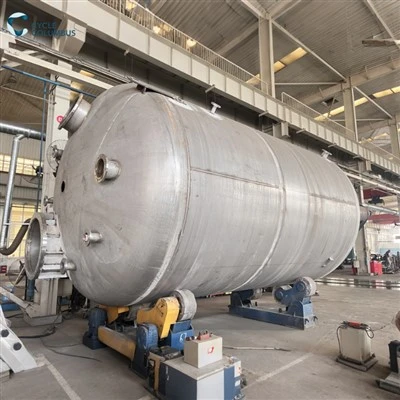
First, let’s start with the basics: an absorption column (also called a packed column or tray column, depending on design) is a vertical, cylindrical vessel built to mix two immiscible fluids. Typically, one fluid is a gas stream carrying impurities, and the other is a liquid solvent that binds to those impurities, separating them from the clean gas. For this to work, the two fluids need to flow countercurrently to each other—gas moves upward through the column, liquid trickles downward, meeting at every level of the internal packing or trays to transfer mass.
Flooding is the point where this balanced, countercurrent flow breaks down completely. Here’s how it happens: as you increase the flow rate of either the upward-moving gas or the downward-moving liquid, the forces between them start to fight. At low flow rates, gas passes easily around the liquid, and the liquid drains smoothly down the internals. But when flow rates rise to a critical threshold, the upward gas flow creates enough drag to hold the liquid in place, rather than letting it drain. Eventually, liquid starts to back up all the way up the column, mixing with the upward gas. What was once a clean, two-phase flow becomes a messy, unbalanced slug of liquid and gas. No more mass transfer—just inefficiency, pressure spikes, and potential damage to the column’s internals.
I’ve seen flooding play out in a client’s natural gas processing plant three years ago, and it still sticks with me. Their absorption column was a 10-year-old tray design, sized for a gas flow rate that had doubled when their downstream expansion project came online. One morning, the control room alarm blared: column pressure shot up 40% in 10 minutes, and the clean gas output dropped to nearly zero. The maintenance team had to shut the column down for two days to clear the flooded trays. That downtime cost the client over $120,000 in lost product and emergency repairs—and all because they didn’t account for flooding margins when specifying their column.
There are two main types of flooding, and understanding the difference helps avoid it: tray flooding and packed column flooding, the two most common designs we supply, each with their own triggers. Tray flooding happens when the liquid level on a tray gets so high that it starts to “dump” into the tray above it, instead of flowing down through the tray’s downcomer. This is usually caused by too high a gas flow rate, which blows liquid upward through the tray’s holes, or too high a liquid flow rate, which overwhelms the downcomer’s ability to drain liquid. Packed column flooding, on the other hand, affects columns filled with random or structured packing, not trays. Here, flooding occurs when gas flow drags the liquid film on the packing surfaces upward, rather than letting it flow down. For structured packing specifically, this can also happen if the packing’s geometry is mismatched to the flow rates, creating uneven channels that trap liquid.
A common misconception here is that flooding only happens at maximum design flow. That’s not true—flooding can occur at any flow rate if the column isn’t sized correctly, or if internals wear out over time. For example, a client in the fertilizer industry recently came to us with a 15-year-old packed column that was flooding at half its original design flow. Upon inspection, the original packing had degraded, creating gaps where liquid could pool and restrict gas flow, triggering flooding at lower rates than intended.
So, how do we prevent flooding? As an absorption column supplier, our approach starts long before manufacturing a vessel. We use a set of industry-standard correlations, most notably the Sherwood correlation, to calculate the flooding point for a column’s design. This correlation factors in everything from fluid properties (viscosity, density, surface tension) to column diameter, internal type (trays vs. packing), and expected flow rates. The key here is to operate the column well below the flooding point—usually 70-85% of the calculated flooding velocity, depending on the process’s flexibility. If a client anticipates future flow rate increases (like the natural gas client did), we add a 20-30% margin during sizing, so they can expand without risking flooding.
For packed columns, we also pair the right packing with the process. Random packing (like Raschig rings or Pall rings) is often used for low-cost, general applications, while structured packing (like corrugated metal sheets) offers higher efficiency for larger flow rates, but has a narrower operating window before flooding. Our team works with clients to match packing type to their expected flow variations—for example, a refinery that runs variable gas rates might get a random packing column with a wider flooding margin, while a chemical plant with stable flow might opt for structured packing for better mass transfer.
We also design internals to minimize flooding risk. For tray columns, that means sizing downcomers large enough to handle liquid flow without backup, and designing tray holes to prevent gas from blowing liquid upward. For packed columns, we add liquid distributors at the top of the packing, which evenly spread the solvent across the packing surface—uneven distribution is a top cause of flooding in packed columns, as it creates dry spots where gas can speed up and drag liquid upward.
Even with good design, operational issues can trigger flooding. I always tell our clients that a well-engineered column is only as good as its operation. Over time, scale buildup on internals, clogged tray holes, or degraded packing can alter flow dynamics and lower the flooding point. That’s why we offer post-installation support, including internal inspections and performance audits, to catch early signs of impending flooding before it causes downtime.
Last year, we worked with a small biogas plant that was struggling with frequent flooding in their absorption column used to remove hydrogen sulfide. They had purchased a low-cost, off-the-shelf column that wasn’t sized for the variable flow of their feedstock. We retrofitted their column with structured packing sized for their actual flow rates, adjusted the downcomer design to match their liquid solvent flow, and added a liquid redistributor. The result? Their flooding incidents dropped to zero, and their hydrogen sulfide removal efficiency went up by 12%. The retrofit cost a fraction of the downtime they had been facing.
Flooding isn’t just a technical failure—it’s a financial one. For every hour a column is down, a mid-sized plant can lose $10,000 or more in lost product, utility costs, and labor. That’s why choosing the right absorption column, sized with proper flooding margins, is one of the most critical investment decisions a process facility can make.
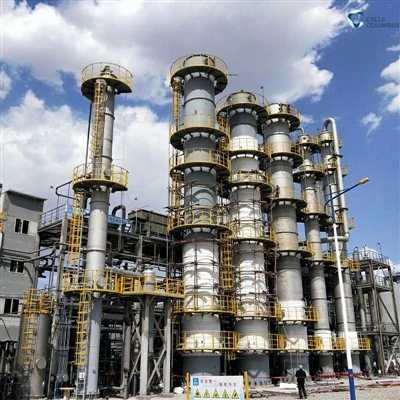
If you’re experiencing unplanned flooding, need a new absorption column for your upcoming project, or want to audit your existing column’s performance to avoid flooding, our team can help. We design, manufacture, and support absorption columns tailored to your specific process needs, with built-in flooding prevention to keep your operations running reliably.
Distillation Towers References
- Sherwood, T. K., Pigford, R. L., & Wilke, C. R. (1975). Mass Transfer. McGraw-Hill.
- Lockett, M. J. (1986). Distillation Tray Fundamentals. Cambridge University Press.
- Geankoplis, C. J. (2003). Transport Processes and Unit Operations. Prentice-Hall.
Beijing Cycle Columbus Environmental Science & Technology Co., Ltd.
Beijing Cycle Columbus Environmental Science & Technology Co., Ltd. is one of the most professional absorption column manufacturers and suppliers in China. We are committed to providing high quality customized products with competitive price. Please feel free to buy advanced absorption column made in China here from our factory. Also, quotation is available.
Address: 1201, 12/F, Tower B, Bldg 8, Guancheng Garden, Haidian District, Beijing, China
E-mail: Info@saikekanglun.com
WebSite: https://www.cycle-columbus.com/
