If you’ve ever stood in a hospital waiting room, watched a nurse attach a patient monitor to a wall outlet, or wondered why the power cord on an MRI machine looks so robust, you’re witnessing a quiet, critical layer of medical care: medical grade power supply safety. For 12 years, I’ve led our small, specialized team as a Medical & Health Care Power Supply supplier, and I can tell you this isn’t just “another piece of equipment” on a medical device bill of materials. It’s the difference between a device that supports a nurse saving a life and one that becomes a dangerous liability for a hospital or a patient. Medical&Health Care Power Supply
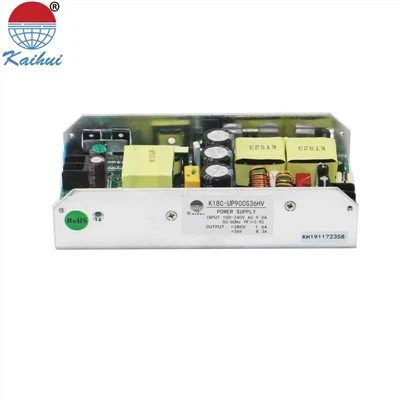
A few years back, we supplied power supplies for a line of portable defibrillators that were being rolled out to rural clinics across the Pacific Northwest. The client’s original vendor had used a “general grade” power supply—cheaper, off-the-shelf, built for office printers and home appliances. Within six months, we got three urgent calls: two units stopped working mid-test during a simulated emergency, and one developed a small arc on the power port when plugged into an older clinic outlet. That’s when the client realized: medical grade power supply safety isn’t a box to check during approval; it’s the foundation that keeps devices working when every second counts.
First, let’s cut through the jargon to define what medical grade power supply safety actually means. Unlike consumer or industrial power supplies, which are designed to work in environments where a failure is an inconvenience, medical grade units are engineered for three non-negotiable priorities: patient protection, equipment reliability in extreme clinical conditions, and compliance with global regulatory standards that don’t exist for other power products. The core difference starts with how these units handle power—both the AC coming from the wall and the DC they send to the device it’s powering. General grade supplies often have minimal isolation between the input and output sides; if a power surge hits the wall, that surge can travel straight to the medical device. A medical grade power supply has at least two layers of electrical isolation, creating a physical barrier that stops stray current from ever reaching a patient or sensitive device circuitry. That’s not a “nice feature”—it’s a regulatory requirement for every device that comes into contact with a patient.
Let’s break down the two most critical aspects of this safety: current leakage and fire risk. Current leakage is exactly what it sounds like: small amounts of electrical current that can escape from the power supply’s internal parts. For medical devices that touch a patient—like ECG monitors, insulin pumps, or surgical tools—even a tiny current (as little as 100 microamps, less than a thousandth of what a phone charger uses) can be fatal. That’s called macroshock if it’s directly applied to the heart, or microshock if it’s through a catheter or an IV line, which bypasses the skin’s natural resistance. Medical grade power supplies are tested to limit leakage to well below that 100 microamp threshold, often as low as 10 microamps, because any extra current could be enough to disrupt a patient’s heart rhythm. General grade power supplies, by contrast, might leak 500 microamps or more—way outside the safety limit for medical use, even if they work fine in a home setting.
Then there’s fire risk, which is a bigger deal in clinical spaces than in most other places. Hospitals are full of flammable materials: oxygen tanks, anesthetic gases, even disposable plastic surgical drapes. A power supply that overheats can ignite these materials in seconds, and with hundreds of patients in the building, a fire from a faulty power supply isn’t just a device failure—it’s a public safety crisis. Medical grade power supplies use special thermally stable materials for their enclosures, internal wiring, and components. They also have built-in over-temperature protection that cuts power automatically if the unit gets too hot, rather than risking a meltdown. General grade units often use cheaper plastic that can warp or melt at lower temperatures, and they lack that automatic shutoff feature. We once tested a power supply from a third-party vendor that failed a thermal test at 85 degrees Celsius—way below the 105-degree minimum required for medical grade. In a busy emergency room, that unit would have burned out during a long shift, and maybe caught fire before anyone noticed.
Now, you can’t talk about medical grade power supply safety without talking about regulatory compliance. This isn’t a “voluntary” thing; it’s a legal requirement for any device used in a hospital, clinic, or home health setting in nearly every country. The two most common standards we work with are IEC 60601 (the global standard for medical electrical equipment) and UL 60601 (the U.S. version of that standard), as well as EN 60601 for the European market. These standards dictate every detail of a power supply: how much isolation it needs, how much leakage current it can have, how it withstands power surges, how it holds up to dust and humidity, and even how it’s labeled for use. For example, IEC 60601 requires that medical power supplies pass a “fault condition test,” where engineers simulate a short circuit inside the unit—if it catches fire or sends dangerous current out, it fails. General grade supplies never have to pass this test, because they’re not for use near patients.
What most people don’t realize is that medical grade power supply safety also extends to how the unit works in the clinical environment. Hospitals aren’t perfect: wall outlets can be loose, power can fluctuate when a piece of large equipment turns on, and some facilities are in remote areas with unreliable grid power. A medical grade power supply is designed to handle these inconsistencies. It can operate in a wider temperature range (from -10 degrees Celsius to 50 degrees Celsius, for example, compared to 0 to 40 degrees for general grade) and withstand voltage surges that are 2 to 3 times higher than consumer supplies. We once supplied power supplies for a neonatal incubator in a clinic in rural Kenya, where power outages were a weekly occurrence. The incubator’s power supply had to switch seamlessly to a backup battery within 10 milliseconds to keep a premature baby’s temperature stable—something a general grade supply would never be able to do. That reliability isn’t just convenient; it’s a matter of life and death for vulnerable patients.
Let’s talk about a common misconception: some device manufacturers think they can “save money” by using a general grade power supply and just adding an extra fuse or a better cord. We see this mistake all the time. A few years ago, a startup brought us a prototype for a portable blood glucose monitor meant for use in home health settings. They’d used a $2 general grade power supply and thought swapping out the power cord for a shorter one would fix the safety issues. When we tested it, it had 420 microamps of leakage current—four times the legal limit for medical devices. The fuse, too, was too slow to cut power in the event of a short circuit, and the unit failed the isolation test. Trying to retrofit a general grade unit never works; the internal design is completely different. Medical grade power supplies are built from the ground up with patient safety as the core design goal, not an afterthought.
Another key part of safety is long-term reliability. Medical devices often stay in use for 7, 10, even 15 years. A general grade power supply might last 3 to 5 years before its components wear out, which means a device that’s critical for patient care will fail mid-service. That’s not just a hassle for a hospital—it’s a liability. Medical grade power supplies use components that are rated for 50,000 hours of use, compared to 20,000 hours for general grade, and every component is tested to ensure it won’t degrade over time. We track the failure rate of our power supplies, and over 10 years, our units have a failure rate of less than 0.1%. That means out of 1,000 units in the field, only one will fail in a decade. For a hospital with 100 critical care beds, that’s a risk you can’t afford to take.
Now, if you’re a device manufacturer, hospital procurement manager, or home health care provider reading this, you’re probably wondering: how do I know I’m getting a true medical grade power supply, not a product that’s labeled “medical grade” but skips key safety tests? There are three red flags to watch for. First, check the certification: true medical grade power supplies have a label from a notified body (like Underwriters Laboratories, TÜV SÜD, or CSA) that specifically lists the IEC 60601 or UL 60601 standard. If the label only says “UL approved” without the medical designation, that’s a general grade supply. Second, ask for test reports. A reputable supplier will have no problem sharing third-party test results that show leakage current, isolation voltage, and thermal performance. If they hesitate or can’t provide those reports, walk away. Third, ask about the unit’s end-of-life testing. Many suppliers cut corners on testing for how the unit behaves when it reaches the end of its life—like if it fails and stops working safely. A true medical grade power supply will be tested to ensure it doesn’t create a fire hazard or leak current when it fails.
Let’s circle back to the story I opened with. That client in the Pacific Northwest who had issues with their general grade power supplies? After they worked with us, we supplied 1,200 medical grade power supplies for their defibrillators. We provided them with full test reports, had our in-house engineering team walk through every safety feature, and even did a 6-month field trial in three rural clinics to ensure the units worked with their local power grids. A year later, they sent us a note saying they’d had zero failures, and their emergency response times had gone down 20% because the defibrillators never cut out during use. That’s the impact of medical grade power supply safety: it doesn’t just check a box for regulators; it directly improves patient outcomes.

At the end of the day, every Medical & Health Care Power Supply we design is built for one reason: to keep patients safe when they need it most. We don’t cut corners on components, we don’t skip safety tests, and we don’t offer products that would put anyone at risk. If you’re a device manufacturer looking to source power supplies for your next medical device, a hospital looking to upgrade your critical care equipment, or a clinic in need of reliable power solutions, we’re here to help. We work with teams across the globe, from small startup innovators to large hospital networks, to tailor power supply solutions that meet your specific safety and performance needs. Reach out to our team to discuss your project, and we’ll walk you through every step of medical grade power supply safety so you can be confident your device will perform when it matters.
Non PFC Power Supply References
IEC 60601-1:2012, Medical electrical equipment — Part 1: General requirements for basic safety and essential performance
UL 60601-1:2020, Standard for Medical Electrical Equipment, Part 1: General Requirements for Basic Safety and Essential Performance
TÜV SÜD. (2022). Medical Grade Power Supplies: Safety Guidelines for Clinical Applications
World Health Organization. (2021). Medical Device Safety: Power Supply Reliability in Low- and Middle-Income Settings
Guangzhou Kaihui Electronics Co., Ltd.
Guangzhou Kaihui Electronics Co., Ltd. is one of the most professional medical&health care power supply manufacturers and suppliers in China, specialized in providing the best customized service. We warmly welcome you to buy high quality medical&health care power supply made in China here from our factory.
Address: 2F BLDG8, Standard Ind.Park, Dongchong Town, Nansha District 511453, Guangzhou, Guangdong, China
E-mail: amy@gzkaihui.com
WebSite: https://www.kaihuipowersupply.com/
