If you’ve ever walked through a power substation at dusk, watching those massive transformers hum steadily under the weight of every light, appliance, and factory machine in the grid, you know they’re the unsung backbone of modern power. But here’s a question I get asked all the time by plant managers, substation operators, and even new engineers just learning the trade: how do these workhorses handle overloads—those sudden, unexpected spikes in demand that make the grid stretch to its limits? As someone who’s been supplying power transformers for over a decade, I’ve seen firsthand what happens when overloads are ignored, and how the right design, materials, and maintenance can turn a potential crisis into a temporary, manageable event. Today, I want to break this down in plain, practical terms—no overly complex jargon, just real-world context that anyone who relies on power can use. Power Transformer
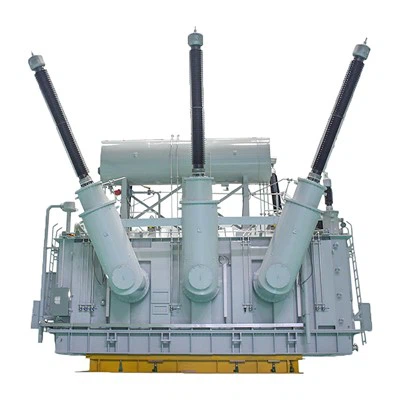
First, let’s define what an overload actually is, because it’s not just “more power than a transformer is supposed to carry.” Every power transformer has a nameplate rating, a number like 10 MVA or 33 kVA, that tells you the maximum continuous load it’s built to handle without shortening its lifespan. An overload is any load that exceeds that rating, even for a short time. It might be a summer afternoon when air conditioners across a city kick on all at once, a factory ramping up production for a weekend order, or a storm taking down a portion of the grid, forcing your transformer to pick up extra load from a fallen line. The key here is that transformers are designed to handle brief overloads—within limits—because grids are inherently variable. The problem comes when operators don’t recognize the signs, or when the transformer is too old or poorly maintained to cope.
So how does a modern power transformer actually manage that extra load? Let’s start with the core components. A transformer’s main job is to step voltage up or down, using two sets of copper windings wrapped around a steel core. When you push more power through those windings, two things happen immediately: the windings get hotter, and the core experiences extra magnetic stress. Modern transformers aren’t just built to withstand this—they’re engineered to dissipate that heat efficiently. Most large distribution and power transformers use mineral oil as a coolant, which circulates around the windings and core, absorbing heat and transferring it to external radiators where it blows off into the air. Some larger units use forced-oil cooling, with pumps to circulate the oil faster and fans on the radiators, but even the smallest standard transformers have natural convection cooling systems that can handle short, controlled overloads.
But heat is the biggest enemy here. If the windings get too hot, the insulation that wraps around them breaks down, leading to shorts, core damage, or even a catastrophic failure. That’s why transformer manufacturers build in what we call “insulation temperature rise margins.” The insulation in our transformers, for example, is rated for a maximum continuous temperature of 110°C (230°F) for the standard cellulose paper we use. A temporary overload adds extra heat, so we calculate how much over the nameplate load the transformer can take without pushing that insulation too far. For most distribution transformers, that’s 150% to 200% of their rated load for 1 to 2 hours—plenty of time for grid operators to identify the source of the overload and adjust loads elsewhere. Larger power transformers can often handle even more, with higher coolant flow or thicker insulation that can tolerate a bit more heat before degrading.
That’s not the end of the story, though. Modern transformers also come with built-in protection systems that actively manage overloads, not just passively withstand them. I’ve seen so many old transformer units that just kept running until they burned out, no warning at all. Today, we install temperature sensors in the windings and the top of the oil, and load tap changers (LTCs) that adjust the transformer’s voltage ratio to stabilize output even when the load changes. Some units even have digital monitoring systems that alert operators if the load is approaching a dangerous level, so they can shift some power to other transformers or shut off non-critical loads before the heat builds up too much. We’ve worked with municipal power departments that started using these monitoring systems a few years ago; they told us that since adding them, they’ve cut their overload-related transformer failures by 70%—that’s a huge difference for keeping power on during peak demand.
But here’s the thing: even the best-designed transformer can’t handle an overload forever, and there are unmanageable overloads that cause problems. A sustained overload—one that runs for 8 hours or more at 150% of the nameplate load—is a guaranteed way to speed up insulation degradation, even if you didn’t notice it at first. I remember a call from a food processing plant a few years back; their transformer was supplying power to two production lines and a refrigeration unit, and they added a third line without upgrading the transformer. For three months, that unit ran at 140% load every shift, and by the time they called us for a replacement, the insulation was brittle and the windings had started to warp. It wasn’t a sudden failure, but it was a predictable one—ignoring overloads leads to early transformer replacement, which is far more expensive than doing the job right upfront.
That’s why, as a transformer supplier, I always make a point to tell customers that overload management starts before the transformer is even installed. When you’re specifying a new unit, we can work with you to calculate your peak expected loads, account for future growth, and size the transformer with extra capacity (called “nameplate oversizing”) that lets you handle occasional overloads without stress. For example, if your plant’s peak load is 10 MVA, we might recommend a 12.5 MVA transformer—25% extra capacity—so you can add a new machine or run two lines at once without pushing the unit past its limit. We also use higher-grade insulation materials in our transformers, like Nomex paper that can withstand temperatures up to 180°C, for customers who expect to deal with frequent overloads. Those transformers cost a bit more upfront, but they last 15 to 20 years longer than standard units, and the maintenance costs are far lower.
Maintenance is another huge piece of the puzzle that too many people overlook. A transformer can be perfectly designed, but if its cooling system is clogged with dirt, or the oil is old and not circulating properly, it won’t handle overloads nearly as well. Twice a year, we recommend that customers have their transformers inspected: checking the oil quality, cleaning the radiators, testing the temperature sensors, and verifying that the load tap changer is working correctly. Last year, a small business owner came to us with an old transformer that was failing during summer peak loads. When we inspected it, we found the radiators were so coated with dust that barely any air could flow through them—so even a small overload pushed the temperature way too high. A $200 cleaning job would have fixed it, but they’d skipped maintenance for 5 years. That’s a common mistake, and it’s one that leads to a lot of unnecessary transformer failures.
I also get asked sometimes: can transformers handle overloads during outages, when the grid is compromised? That’s one of the most challenging overload scenarios, because there’s no extra capacity on other lines to shift load to. After a storm knocks down a distribution line, your transformer might have to supply power to a whole neighborhood that was previously fed by another unit. In those cases, the transformer’s ability to handle that extra load without failing is critical. The transformers we supply for grid resilience projects are built with emergency overload ratings—they can handle up to 200% of their load for 4 hours, which is more than enough time for repair crews to fix the downed lines. We’ve deployed dozens of these units for municipal power companies in hurricane-prone regions, and the feedback has been that they’ve reduced power outage duration by an average of 3 hours during major storms.
Of course, no transformer is invincible. A severe, sustained overload of 250% or more—like if a main line short-circuits and the transformer has to carry fault current for an extended period—will almost certainly cause damage, no matter how well it’s built. That’s why protection devices like fuses and circuit breakers are non-negotiable. Those devices are the first line of defense, tripping automatically if the load gets too high, to prevent the transformer from being damaged. A lot of customers think transformers trip on their own, but that’s rarely the case—they rely on those external devices to stop overloads before they become dangerous.
So to circle back to the original question: how does a power transformer handle overloads? It’s a combination of smart design, built-in cooling and insulation, active monitoring and protection systems, and proactive maintenance. It’s not just a machine that passively takes extra power—it’s engineered with margins to handle the reality of a grid that’s always changing. That’s why choosing the right transformer, from a supplier who understands not just the specs but the real-world needs of your site, is so important.
If you’re dealing with frequent overloads, planning for future load growth, or worried about your current transformer’s ability to handle peak demand, I’m here to help. We’ve worked with everyone from small retail centers to large industrial plants to grid operators, designing transformers that fit their exact needs, with built-in capacity to handle overloads when they come. Whether you need a custom unit, a maintenance check, or just advice on sizing the right transformer for your site, reach out to our team to start a conversation. We’ll walk through your load profiles, explain your options, and make sure you have a transformer that keeps power running, even when demand spikes.
Integrated Transformer References
- IEEE Std. C57.91, IEEE Guide for Loading Mineral-Oil-Immersed Transformers and Step-Voltage Regulators.
- National Electrical Manufacturers Association (NEMA) Standard TP 1, Guide for Loading Dry-Type Transformers.
- American National Standards Institute (ANSI) C57.12.00, General Requirements for Liquid-Immersed Distribution, Power, and Regulating Transformers.
- International Electrotechnical Commission (IEC) 60076-1, Power Transformers – Part 1: General.
Nantong Yawei New Energy Technology Co., Ltd.
As one of the most professional power transformer manufacturers and suppliers in China, we’re featured by quality products and good service. Please rest assured to wholesale durable power transformer made in China here from our factory. Customized orders are welcome.
Address: Room 28-101, Building 27 and 28, No.333 Kaiyuan Avenue, Sunzhuang Subdistrict, Hai’an City, Nantong City, Jiangsu Province, China
E-mail: admin@nantongyawei.com
WebSite: https://www.nantongyawei.com/
